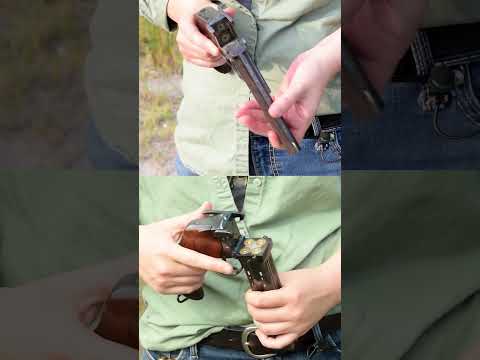
History Primer 150: British Webley Royal Irish Constabulary Documentary

Published on January 11, 2022
Duration: 66:05

This documentary delves into the history and technical evolution of the Webley Royal Irish Constabulary (RIC) revolver. It traces the Webley family's entry into the firearms trade, their early licensed production, and their eventual rise to prominence through strategic licensing and aggressive marketing. The video details the technical specifications, design changes, and operational mechanisms of various RIC models, including the New Model and the 1883 Light, highlighting their adoption by police forces worldwide and their place in firearms history.

Quick Summary

The Webley Royal Irish Constabulary (RIC) revolver, particularly the New Model and 1883 Light variants, evolved from early licensed designs to become a prominent police firearm. Utilizing mechanisms derived from Tranter and Adams patents, these revolvers were adopted by forces worldwide, with Webley's success fueled by strategic licensing, aggressive marketing, and increasing adoption of machine manufacturing.

Chapters

  1. 00:20Introduction: Webley RIC Revolver
  2. 01:48The Webley Family and Early Gun Trade
  3. 03:34Samuel Colt's Influence and Machine Manufacturing
  4. 05:47Webley's Early Designs: Wedge Frame & Rimfire Revolution
  5. 07:03Webley & Tranter Collaboration and Dual System Revolver
  6. 08:28The Holster Model and Webley's Number One
  7. 10:10Webley RIC No. 1 First Pattern and Bentley Connection
  8. 12:50The Royal Irish Constabulary and Adoption
  9. 13:42Webley RIC New Model: Design Evolution
  10. 15:07Final Evolution of the Webley RIC
  11. 16:06Examining the Webley RIC New Model .450
  12. 21:35Animation: Webley RIC Loading and Firing Mechanism
  13. 25:50Webley RIC Production and Modern Machinery
  14. 27:47Aggressive Marketing: The RC 1882 Model
  15. 29:00Webley Model Confusion: RC No. 1 vs. Regular No. 1
  16. 30:03Webley 1883 Light: Compact Design and Features
  17. 34:47Shooting Impressions: Webley 1883 Light
  18. 35:50Webley RIC Production Slowdown and Solid Frame Abandonment
  19. 37:01The Custer Webley Legend
  20. 38:50May's Review: Webley RIC New Model vs. Tranter
  21. 56:46May's Review: Webley 1883 Light vs. RIC New Model
  22. 62:29Conclusion: Webley & Tranter Legacy

Frequently Asked Questions

What cartridge did the Webley Royal Irish Constabulary revolver primarily use?

The Webley RIC revolver was initially chambered for the .450 Adams cartridge. Later variations, such as the New Model RIC, were also produced for the .455 British cartridge, and some pieces appeared in unusual chamberings like .44 Russian.

How did Webley's manufacturing differ from competitors like Tranter?

While Tranter focused on more handmade, artisanal production, Webley increasingly adopted machine work, especially after securing large contracts like the RIC order. This led to a more polished, consistent finish on Webley firearms compared to the distinctly hand-worked feel of Tranter guns.

What was the significance of the Webley RIC adoption by the Royal Irish Constabulary?

The 1868 adoption of the Webley revolver by the Royal Irish Constabulary provided Webley with a substantial, consistent order. This allowed them to invest in more advanced machinery and tooling, paving the way for larger-scale production and establishing Webley as a significant government arms supplier.

What were the ergonomic issues with the Webley 1883 Light model?

The Webley 1883 Light featured a fatter, bell-shaped grip that was found to be uncomfortable and detrimental to shooting stability. This design led to grip slippage and hand discomfort, particularly during recoil, making it less ideal for extended use.

More Reviews Videos You Might Like

More from C&Rsenal

View all →