History Primer 177: Webley Pryse No.4 Documentary

Published on May 16, 2023
Duration: 77:43

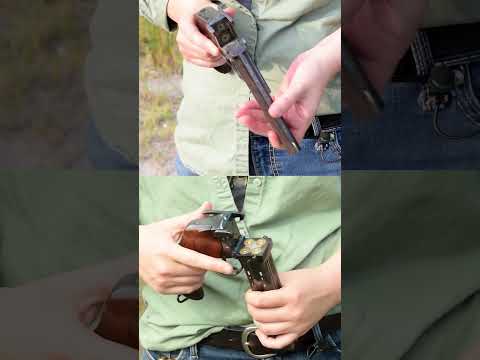
This documentary delves into the history and technical evolution of the Webley No.4 revolver, often misidentified as the Webley Pryse. It traces the lineage from Belgian inventor Philippe Joseph Cony's designs, highlighting key features like the top-break action and self-extracting mechanism. The video details the progression through various patents and manufacturers, culminating in Webley's refined No.4 model, discussing its variations, calibers, and eventual adoption.


Quick Summary

The Webley No.4 revolver, often misidentified as the Webley Pryse, evolved from Belgian inventor Philippe Joseph Cony's self-extracting designs. Key advancements included a controlled automatic snap-back extractor and an out-of-battery safety, making it a reliable firearm for its era, commonly chambered in 455 Webley.

Chapters

  1. 00:21Introduction: Webley No.4 Revolver
  2. 00:41Physical Specifications and Caliber
  3. 00:56Top Break Action and Cartridge
  4. 02:41The Murky Origins: Liege and Birmingham Arms Industry
  5. 04:22Philippe Joseph Cony: The Belgian Inventor
  6. 05:05Cony's Self-Extracting Revolver Design
  7. 06:36Early Cony Patent Revolver Example
  8. 07:57Comparison: Cony vs. Smith & Wesson Extractors
  9. 09:18August Francotte: Belgian Manufacturer
  10. 10:20Mark II Cony Revolver Design
  11. 11:50All-Belgian Francotte/Cony Revolver Details
  12. 13:35Cony Locking Levers and Cylinder Removal
  13. 14:41Cony Extractor System Explained
  14. 15:57Alexandre Fanu and Cylinder Release
  15. 17:52Webley No.4 vs. Cony: Lockwork Differences
  16. 18:09Rebounding Hammer Safety Feature
  17. 19:19Belgian Cony Revolver Summary
  18. 21:12Cony Top Break in Austria and the Balkans
  19. 21:30British Market and Self-Extracting Revolvers
  20. 22:18Charles Price the Younger and British Cony Patents
  21. 23:01Charles Price the Elder and Price & Company
  22. 24:52Charles Price the Younger's Patents
  23. 25:31Price's 1876 Cylinder Stop Patent
  24. 26:32Webley's Entry: The RIC Revolver Success
  25. 27:26Webley's Next Step: The No.4 Revolver
  26. 28:01Early Webley No.4: Army and Navy Self-Extracting
  27. 28:20450 Adams Cartridge Issues
  28. 29:28Compromise Cartridge: Enfield Mark II (455)
  29. 30:30Webley's 455 Cartridge Adaptation
  30. 30:54Webley's Unique Snap-Back Extractor Solution (1881 Patent)
  31. 31:44Post-1881 Webley No.4 Features
  32. 32:26Out-of-Battery Safety (John Carter Patent)
  33. 33:03Webley No.4: The Updated Model
  34. 33:53Webley No.4 Extractor Mechanism
  35. 35:25Webley No.4 Cylinder Locking and Sprag Function
  36. 37:08Webley No.4 Out-of-Battery Safety Mechanism
  37. 38:38Webley No.4 Markings: 476 Cartridge
  38. 39:31Webley No.4 External Features and Lockwork
  39. 40:07Webley No.4 Lockwork Differences: Cylinder Stops
  40. 40:32Webley No.4 Hammer Rebound
  41. 41:03Webley No.4 Extractor Star and Rod
  42. 43:33Webley No.4 Production: Batch Fitting
  43. 43:59Webley No.4 Sub-Models and Variations
  44. 44:20Webley No.4 Serial Number Mysteries
  45. 46:10Webley Wilkinson Revolvers
  46. 48:07Army and Navy Cooperative Store Sales
  47. 48:32Webley No.4 Marketing to Chinese Navy
  48. 49:04Webley No.4 Popularity in South Africa (Boers)
  49. 49:56Anecdote: Cony Patent Revolver Cylinder Discard
  50. 50:37Comparison: Belgian Cony vs. Webley No.4
  51. 52:10First Impressions: Belgian Cony Revolver
  52. 53:36Belgian Cony: Complex Operation
  53. 54:57Belgian Cony: Dual Paddle Latch System
  54. 55:20Belgian Cony: Lack of Out-of-Battery Safety
  55. 56:49Webley No.4: Superior Safety System
  56. 57:10Grip Comparison: Belgian Cony vs. Webley No.4
  57. 58:10Loading and Firing Impressions: Webley No.4
  58. 59:20Lockwork Comparison: Belgian Cony vs. Webley No.4
  59. 59:50Sights Comparison: Belgian Cony vs. Webley No.4
  60. 61:10Target Shooting Orientation
  61. 62:12Webley No.4 vs. Belgian Cony: Key Differences
  62. 64:04Feel and Handling Comparison
  63. 66:33Cartridge Differences and Shooting Experience
  64. 67:03Range Performance and Reliability
  65. 68:29Preference: Webley No.4 vs. Belgian Cony
  66. 69:10Ruggedness and Build Comparison

Frequently Asked Questions

What is the origin of the Webley No.4 revolver's design?

The Webley No.4 revolver's design originates from Belgian inventor Philippe Joseph Cony's patents for break-action, self-extracting revolvers, particularly his 1871 patent. While often called the Webley Pryse, it has no direct Pryse involvement.

What were the key advancements in the Webley No.4's self-extraction mechanism?

Early Cony designs had slow, manual retraction. Webley's later No.4 models (post-1881) incorporated a patented flipper lever system for controlled, automatic snap-back of the extractor, improving reliability and speed over earlier designs.

What safety features distinguish the Webley No.4?

The Webley No.4 includes an out-of-battery safety, patented by John Carter in 1884, which prevents firing if the action isn't fully closed. It also features a rebounding hammer for safe handling, common in British revolvers of the era.

What cartridges were commonly used in the Webley No.4 revolver?

The Webley No.4 was initially chambered for the 450 Adams cartridge, which had issues with rim separation. It later adopted the 455 Mark II cartridge, which used a solid-drawn brass case and longer cylinder, offering improved reliability.

More from C&Rsenal

View all →