This review covers the Adams Mark II revolver, a large-bore, black powder firearm from 1867. It highlights the revolver's weight, overall length, and caliber, noting its British styling and lineage from earlier Adams and Beaumont models. The review details its single-action hammer, trigger pull, grip ergonomics, and sights, while also assessing recoil and its historical context compared to contemporary US firearms.
This video delves into the history and technical aspects of British Enfield revolvers, specifically the Mark I and Mark II models. It highlights their development in the late 19th century as Britain's attempt to standardize sidearms, contrasting them with contemporary Colt and Smith & Wesson designs. The discussion covers their calibers, unique features like the Owen Jones selective ejection system, and their service history, particularly with the Northwest Mounted Police.
The Webley Mark V is a large-frame British revolver weighing 2.25 lbs with an overall length of 9.25 inches. It features a 4-inch barrel and a capacity of six rounds of .455 Webley ammunition. While its balance point is forward and the grip is awkward, it offers heavy yet smooth hammer and trigger pulls, decent sights, and rapid ejection.
This documentary delves into the history and technical evolution of the Webley No.4 revolver, often misidentified as the Webley Pryse. It traces the lineage from Belgian inventor Philippe Joseph Cony's designs, highlighting key features like the top-break action and self-extracting mechanism. The video details the progression through various patents and manufacturers, culminating in Webley's refined No.4 model, discussing its variations, calibers, and eventual adoption.
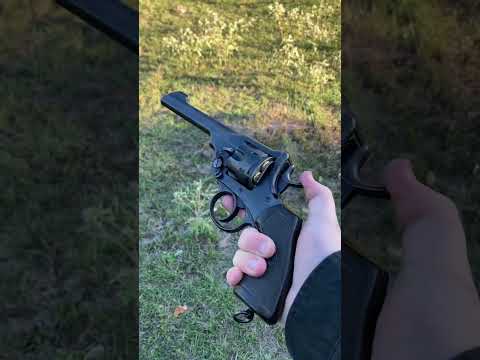
This review covers the Webley Mk VI .455 revolver, highlighting its historical significance and operational features. The demonstration showcases the top-break action, manual loading of six .455 Webley rounds, and live-fire performance using both single and double-action trigger pulls. The video emphasizes the automatic extraction and ejection system, a key characteristic of this classic British military sidearm.
The Tranter Model 1879 is an early British top-break revolver that, despite its innovative features, was not widely adopted. This video details its design, historical context, and mechanical intricacies, highlighting its role as a precursor to later British service revolvers. The presenter, Matthias, provides an expert-level analysis, drawing on extensive research.
This guide details the mechanical operation of the Webley WG revolver, focusing on its double-action, top-break mechanism and the efficient, simultaneous ejection of spent cartridges. It highlights the design's tactical advantage. The information is presented with a high degree of technical detail, reflecting the expertise of the presenter.
This YouTube video focuses on the Webley Mk. IV revolver, specifically a model manufactured in 1943. The description provides a link to a second part of the video, suggesting a more in-depth exploration of the firearm. Given the title and description, the content is expected to delve into the history, features, and potentially the performance of this classic revolver.
You've reached the end! 8 videos loaded.
Gun Laws by State
Read firearms regulations for all 50 states + D.C.
Find Gun Dealers
Search licensed FFL dealers near you.