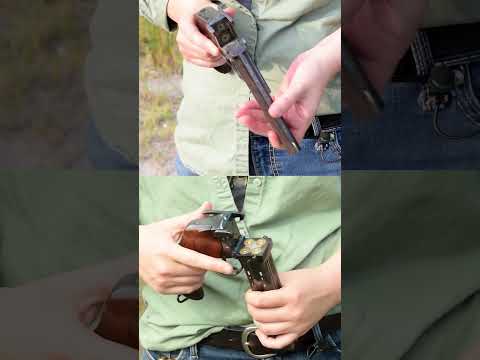
Minute of Mae: German Gewehr 1891

Published on March 23, 2023
Duration: 1:01

This video provides a detailed overview of the German Gewehr 1891 carbine. It covers its dimensions, weight, and the functionality of its Mauser flag safety and two-stage trigger. The review also highlights the sights, the smooth action, and the loading/unloading mechanism, comparing it briefly to its predecessor.

Quick Summary

The German Gewehr 1891 carbine weighs 6.9 pounds with a 37.5-inch length, chambered in 8mm Mauser. It boasts a smooth 'Schleiche' action, Mauser flag safety, two-stage trigger, and clear sights including a V-notch battle sight and Barleycorn front sight.

Chapters

  1. 00:06Introduction: Gewehr 1891
  2. 00:09Dimensions and Weight
  3. 00:16Loading Mechanism and Caliber
  4. 00:24Action and Bolt Handle
  5. 00:29Safety and Trigger
  6. 00:33Sights: Rear and Front
  7. 00:40Recoil and Magazine Ejection
  8. 00:46Comparison to Carabiner 1888
  9. 00:51Key Difference: Stacking Hook

Frequently Asked Questions

What are the key specifications of the German Gewehr 1891 carbine?

The Gewehr 1891 carbine weighs 6.9 pounds and has an overall length of 37.5 inches. It is chambered in 8mm Mauser and uses a five-round 'N' block magazine.

How does the Gewehr 1891's action and controls function?

It features a smooth 'Schleiche' style action with a turned-down bolt handle close to the trigger. It also includes a Mauser flag safety and a two-stage trigger for reliable operation.

What type of sights are found on the Gewehr 1891 carbine?

The carbine is equipped with short, clear sights, including a flip-up V-notch battle sight on the rear ladder and a Barleycorn front sight with protective wings.

What is the main difference between the Gewehr 1891 and the Carabiner 1888?

The Gewehr 1891 is nearly identical to the Carabiner 1888, with the primary distinguishing feature being the addition of a stacking hook on the Gewehr 1891.

Related News

All News →

More Reviews Videos You Might Like

More from C&Rsenal

View all →