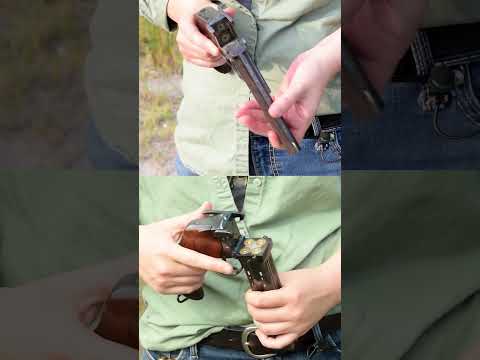
Minute of Mae: U.S. Winchester 1910

Published on November 4, 2021
Duration: 1:01

This review of the Winchester 1910, presented by C&Rsenal, offers an expert-level look at its design and historical context. The video highlights its blowback semi-automatic action, .401 WSL caliber, and 4-round capacity, noting its use in air service during WWI. The instructor provides concise technical measurements and handling observations, signaling high expertise.

Quick Summary

The Winchester 1910 is a blowback semi-automatic rifle weighing 8.2 lbs and measuring 38.3 inches. It fires the .401 WSL caliber with a 4-round magazine, offering increased stopping power over the 1907 model, though with reduced capacity. It was notably used in air service during WWI.

Chapters

  1. 00:00Introduction and Physical Specs
  2. 00:20Capacity and Caliber
  3. 00:30Handling and Controls
  4. 00:40Sights and Historical Context

Frequently Asked Questions

What are the key specifications of the Winchester 1910?

The Winchester 1910 is a blowback semi-automatic rifle weighing 8.2 pounds with an overall length of 38.3 inches. It fires the .401 WSL caliber and has a 4-round detachable box magazine capacity.

How does the Winchester 1910 compare to the Winchester 1907?

The Winchester 1910 is very similar to the 1907 but features a reduced magazine capacity from 10 rounds down to 4. This change allows it to fire the more powerful .401 WSL cartridge, offering increased stopping power.

What caliber does the Winchester 1910 use?

The Winchester 1910 utilizes the .401 Winchester Self-Loading (WSL) caliber. This cartridge provides greater stopping power compared to the calibers used in earlier models like the 1907.

What historical significance does the Winchester 1910 have?

Despite its low capacity, the Winchester 1910 saw use in air service during the Great War (World War I). Its robust design and powerful round made it suitable for certain military applications of the era.

More Reviews Videos You Might Like

More from C&Rsenal

View all →