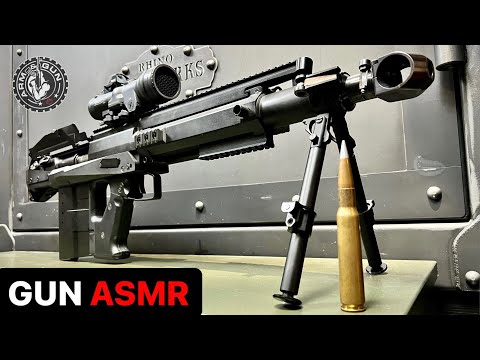
POV the Dutch make AR's | The OG ArmaLite AR-10's

Published on February 10, 2025
Duration: 13:36

This video provides an in-depth look at early Dutch-manufactured ArmaLite AR-10 rifles, highlighting their historical significance and unique features. The presenter, with apparent expertise in firearms, details various contracts, contract-specific variations like the Portuguese and Sudanese models, and discusses technical aspects such as the non-reciprocating charging handle, waffle magazines, and integrated bipods. The review also touches upon the rifle's ergonomics, weight, and its foundational role in modern rifle design.

Quick Summary

Early Dutch AR-10 rifles, manufactured under license by 'Artillery en Red', are historically significant for fulfilling key contracts for Cuba and Sudan. They featured innovative designs like non-reciprocating charging handles and 'waffle' magazines, establishing a foundational platform that influenced subsequent firearms like the AR-15 and SR-25.

Chapters

  1. 00:00Introduction to Dutch AR-10s
  2. 00:51Licensed Manufacturing and Contracts
  3. 01:39Early Contracts: Cuban and Sudanese
  4. 02:02Portuguese Contract and Prototypes
  5. 02:14Canadian Importation: Wilky Arm Sales
  6. 02:53Sudanese Example and Serial Numbers
  7. 03:19Variations: Flash Hiders and Charging Handles
  8. 03:24Non-Reciprocating Charging Handle
  9. 04:26Portuguese Model with Bipod
  10. 04:45Weight and Dimensions
  11. 05:24Firearm Comparisons
  12. 06:49Magazine and Charging Handle Details
  13. 07:17Controls: Mag Release, Safety, Bolt Catch
  14. 07:35Takedown Pins and Proof Marks
  15. 08:02Sights and Gas Shut-off
  16. 08:25Bipod Deployment
  17. 08:39Handguard and Waffle Magazines
  18. 08:54Flared Magwell and Winter Trigger Guard
  19. 09:09Trigger Feel
  20. 09:28Ergonomics and Handling
  21. 09:47Accuracy and Full Auto Capability
  22. 10:00Buffer Tube System and Bayonet Lug
  23. 10:34ASMR Review and Secret Sauce
  24. 11:35The 'Secret Sauce': Enduring Design
  25. 11:48Evolution to SR-25
  26. 12:21Conclusion and Future Content

Frequently Asked Questions

What makes the early Dutch AR-10s significant?

These early Dutch AR-10s are significant because they represent licensed production by 'Artillery en Red' rather than direct ArmaLite manufacturing. They fulfilled crucial early contracts for nations like Cuba and Sudan, showcasing unique features like non-reciprocating charging handles and waffle magazines that influenced later rifle designs.

What were some key contracts for the Dutch AR-10?

The Dutch AR-10 was produced for several key contracts. The earliest was the Cuban contract, followed by a substantial Sudanese contract. The Portuguese contract also yielded notable variants, often featuring integrated bipods and distinct furniture, contributing to the AR-10's diverse production history.

What are the defining technical features of the Dutch AR-10?

Distinguishing features include a non-reciprocating charging handle operating on a track system, early 'waffle' pattern magazines designed for double-stack, double-feed, and sometimes an integrated bipod. They also possess a flared magwell and a winter trigger guard, reflecting robust design considerations.

How did the Dutch AR-10 influence modern firearms?

The AR-10's fundamental design, particularly its controls, ergonomics, and overall layout, proved to be exceptionally effective and enduring. This platform laid the groundwork for the AR-15 and was later modernized by Knights Armament with the SR-25, demonstrating the lasting impact of Eugene Stoner's original vision.

More Reviews Videos You Might Like

More from Arm&Gun

View all →