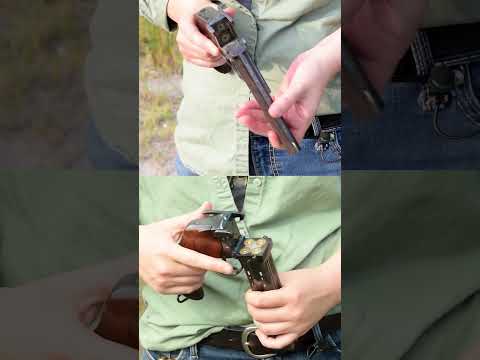
Reprocussion 005: Colt Dragoon B

Published on May 31, 2022
Duration: 65:47

This comprehensive review of the Colt Dragoon revolver, also known as the Improved Model Holster Pistol or Old Model Army Revolver, details its historical development, mechanical evolution, and variations. The video clarifies common misconceptions about Dragoon models, highlighting differences between the Walker, USMR, and various Dragoon iterations. It explores technical improvements like cylinder stop mechanisms and the introduction of a roller on the hammer for smoother operation. The discussion also covers the challenges of historical accuracy in reproductions and the firearm's service history, including its use in conflicts and its eventual obsolescence.

Quick Summary

The Colt Dragoon, also known as the Improved Model Holster Pistol, evolved from the Colt Walker with key changes like a shortened barrel and cylinder for holster fit. Later models featured improved cylinder stop mechanisms for reliability and a flat mainspring with a hammer roller for smoother operation. Early paper cartridges were used, offering a contained ammunition solution.

Chapters

  1. 00:13Introduction to the Colt Dragoon Reproduction
  2. 00:32Technical Specifications and Initial Overview
  3. 01:47Historical Context: Colt's Early Revolvers (Patterson, Walker)
  4. 02:12Development of the Improved Model Holster Pistol (USMR)
  5. 02:48The 'Dragoon' Contract and Nickname Origin
  6. 03:21Elijah King Root's Influence and Colt's Manufacturing Move
  7. 04:47Colt's European Ventures and Patent Filings
  8. 05:45The Austrian 1849 Model and Grahal's Shrinking
  9. 06:30Colt's Diplomatic and Sales Efforts in Europe
  10. 07:08Gaining Influence: Colt's Militia Commission
  11. 08:02Patent Improvements: Cylinder Stops and Safety Mechanisms
  12. 09:08Cylinder Stop Mechanism: Early vs. Improved
  13. 11:14The 'Teat' or Safety Stud on Cylinders
  14. 13:12Debunking the Three-Model Dragoon Classification
  15. 14:50Animated Look Inside a Second Model Dragoon
  16. 17:08Mainspring Evolution: V-Spring to Flat Spring with Roller
  17. 17:33Further Contracts and the Rise of Competition (Wesson & Leavitt)
  18. 18:56Government Trials and Officer Opinions (1850)
  19. 20:36Fourth Contract for Dragoons and the Need for Smaller Pistols
  20. 21:05Patent Infringement Lawsuits: Colt vs. Massachusetts Arms
  21. 23:06Talcott's Downfall and Colt's Business Acumen
  22. 24:06The 'Third Model' Dragoon: Trigger Guard and Other Features
  23. 26:27Loading Lever Latch Update
  24. 27:00Loading Demonstration with Paper Cartridges
  25. 31:12Early Service Cartridges: The Tear-Away Method
  26. 33:37Final Dragoon Contracts and State Militia Sales
  27. 33:44Late Changes: Cut for Shoulder Stock
  28. 34:11The Concept of a Stocked Cavalry Pistol
  29. 36:16Trial of Stocked Revolvers and Utah War Contracts
  30. 38:32Dragoon's Decline: Rise of the 1851 Navy and 1860 Army
  31. 39:06Service History: Indian Wars, Crimean War, Civil War
  32. 39:32Colt's London Factory and Third Pattern Dragoons
  33. 41:03The Dragoon as a Transitional Firearm
  34. 41:39Comparison of Dragoon Reproductions
  35. 44:03Shooting Impressions: Dragoon vs. Walker vs. Reproduction
  36. 46:24Challenges with Dragoon Reproductions and Historical Accuracy
  37. 49:37Assessing the Dragoon's Place in Firearms History
  38. 50:44The Dragoon in the Context of 1850s Firearms Innovation
  39. 53:26Major Difference: Cartridges vs. Flasks
  40. 54:11Paper Cartridge Design and Challenges
  41. 56:39Experience Loading with Paper Cartridges
  42. 57:51Paper Cartridges vs. Flasks: Speed and Practicality
  43. 61:48The Decade Before the Civil War: A Forgotten Developmental Period
  44. 62:47Final Thoughts on the Colt Dragoon
  45. 64:02Acknowledgements and Sponsor Mentions

Frequently Asked Questions

What are the key differences between the Colt Walker and the Colt Dragoon revolvers?

The Colt Dragoon is a development of the Walker, featuring a shorter barrel and cylinder to fit standard holsters and reduce weight. While mechanically similar initially, later Dragoons incorporated improved cylinder stop mechanisms for more reliable lock-up and a flat mainspring with a hammer roller for smoother operation, distinguishing them from the Walker's V-spring.

How did the Colt Dragoon's cylinder stop mechanism evolve?

Early Dragoons, like the Walker, had a simpler cylinder stop. Later models featured an improved stop with a scallop preceding it. This design allowed the stop to drop earlier and engage the cylinder recesses more reliably, preventing missed stops and ensuring a positive lock-up, even with wear or slight imperfections.

What were the early paper cartridges for the Colt Dragoon like?

Early paper cartridges for the Dragoon were a tear-away type. They contained pre-measured powder and a pre-lubricated ball. The process involved tearing the cartridge, pouring the powder into the chamber, and then inserting the ball, offering a contained and measured ammunition solution compared to loose powder flasks.

Why is the Colt Dragoon considered a transitional firearm?

The Colt Dragoon is seen as transitional because it bridges the gap between the massive Colt Walker and later, more compact revolvers like the 1851 Navy. It incorporated mechanical improvements that set the stage for future designs while retaining the .44 caliber power, but was eventually superseded by lighter, more modern firearms.

Are Colt Dragoon reproductions historically accurate?

Many Colt Dragoon reproductions face challenges with historical accuracy, often combining features from different production eras or models. This can result in anachronisms, such as incorrect trigger guard shapes, latch designs, or material choices, making it difficult to find a perfectly accurate representation of specific historical variants.

More Reviews Videos You Might Like

More from C&Rsenal

View all →