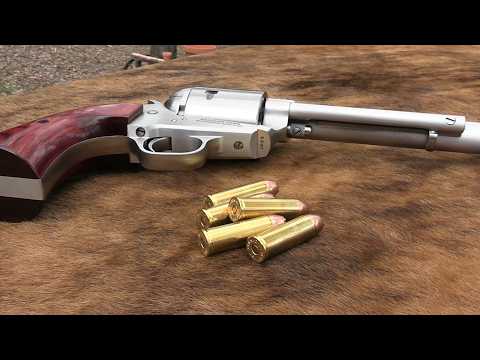
Ruger Alaskan

Published on November 20, 2024
Duration: 0:14

This review demonstrates the impressive power of the Ruger Super Redhawk Alaskan in .454 Casull. Testing involved firing into ballistic clay, showcasing significant recoil, a large muzzle blast, and substantial material displacement. The revolver's robust construction and high-energy performance are highlighted.

Quick Summary

The Ruger Super Redhawk Alaskan, chambered in .454 Casull, was tested using ballistic clay. The demonstration revealed significant recoil, a large muzzle blast, and substantial material displacement upon impact, highlighting the revolver's potent terminal performance.

Chapters

  1. 00:00Loading the Ruger Alaskan
  2. 00:07Firing .454 Casull into Ballistic Clay
  3. 00:10Assessing Clay Block Damage

Frequently Asked Questions

What caliber is the Ruger Super Redhawk Alaskan tested?

The Ruger Super Redhawk Alaskan featured in this demonstration is chambered in .454 Casull, which can also fire .45 Colt ammunition. The test specifically utilized the more powerful .454 Casull round.

How does the Ruger Alaskan perform in terms of terminal ballistics?

When fired into ballistic clay, the Ruger Alaskan in .454 Casull demonstrated significant energy transfer, creating a massive cavity and displacing a large amount of material. This indicates potent terminal performance.

What are the key specifications of the Ruger Super Redhawk Alaskan?

The Ruger Super Redhawk Alaskan has a 6-round capacity, a 2.5-inch barrel, and weighs approximately 44 oz. It is designed to handle powerful calibers like the .454 Casull.

What is the purpose of using ballistic clay in firearm testing?

Ballistic clay is used to visually demonstrate a firearm's terminal performance and energy transfer. It allows observers to see the cavity created by the projectile and assess the extent of material displacement upon impact.

Related News

All News →

More Reviews Videos You Might Like

More from Let’s Shoot It

View all →