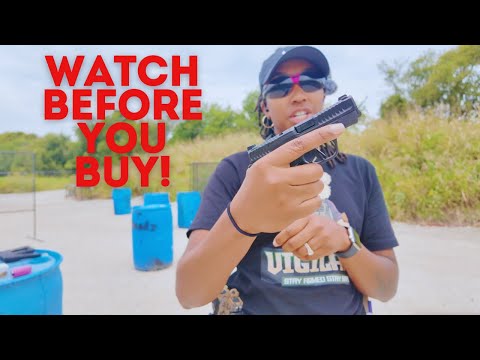
Smith & Wesson Bodyguard 2 0 Shooting Impressions

Published on September 4, 2024
Duration: 25:31

This review of the Smith & Wesson Bodyguard 2.0 focuses on its performance as a micro-compact .380 ACP pistol for concealed carry. The presenters provide shooting impressions, test various ammunition types, and evaluate its accuracy and handling characteristics. They highlight its improved ergonomics over previous models and its suitability for new shooters, despite some limitations with its sights and trigger for precision work.

Quick Summary

The Smith & Wesson Bodyguard 2.0 features a locked-breech .380 ACP design, offering improved recoil management and a less stiff recoil spring for easier racking. While its 12-round magazines may only reliably hold 11 rounds, its wide sights aid rapid acquisition, and its overall shootability makes it a strong contender for new concealed carriers.

Chapters

  1. 00:15Introduction & Overview
  2. 00:50First Shots & Initial Impressions
  3. 02:08PMC Bronze Range Ammo Performance
  4. 03:06Slide Battery & Grip Considerations
  5. 03:42Sight Design & Trigger Finger Placement
  6. 04:22Magazine Capacity & Handling
  7. 05:09Loaded Chamber Indicator & Magazine Window
  8. 05:35Recoil & Shooting Experience
  9. 05:47What's for Dinner? Ammunition Test Setup
  10. 06:21Liberty Civil Defense 50gr Test
  11. 06:55Colt Solid Copper Hollow Point 80gr Test
  12. 07:25Barnes TAC-XPD 80gr Test
  13. 08:13Winchester 85gr Test
  14. 08:39Remington High Terminal Performance 88gr Test
  15. 09:03Hornady American Gunner 90gr XTP Test
  16. 09:32PPU Defense Line 94gr Test
  17. 10:06PPU Handgun Line 94gr FMJ Test
  18. 10:39Lehigh Defense 95gr Test
  19. 11:05Remington Golden Saber 102gr Test
  20. 11:37Spinner Test: Sights & Trigger Control
  21. 13:48Relaxing Hand & Spinner Accuracy
  22. 14:18Trigger Appropriateness for Defense vs. Target
  23. 15:01Practical Accuracy Test (7 Yards)
  24. 16:24Concluding Thoughts: Bodyguard 2.0 Review
  25. 17:13Class of its Own: Carryability & Shootability
  26. 19:04Locked Breech vs. Blowback .380 ACP
  27. 19:31Hammer-Fired vs. Striker-Fired Comparison
  28. 19:58Is .380 ACP the Right Choice?
  29. 20:17Target Market & User Suitability
  30. 20:40Pocket Carry & Holster Considerations
  31. 21:03Recap of Initial Concerns & Findings
  32. 22:13Quick Draw Test (7 Yards)
  33. 23:59Pocket Draw Experiment
  34. 25:13Final Thanks & Outro

Frequently Asked Questions

What are the key advantages of the Smith & Wesson Bodyguard 2.0's locked-breech design?

The Bodyguard 2.0 utilizes a locked-breech system for its .380 ACP caliber. This design generally leads to better recoil management and allows for a less stiff recoil spring compared to traditional blowback-operated firearms, making the pistol easier to rack and more comfortable to shoot.

How does the magazine capacity of the Smith & Wesson Bodyguard 2.0 perform in testing?

Testing revealed that the advertised 12-round capacity magazine for the Bodyguard 2.0 may reliably only hold 11 rounds. Attempting to seat a 12th round often resulted in difficulty, potentially marring the brass, indicating a slight discrepancy in stated versus actual functional capacity.

What are the pros and cons of the sights on the Smith & Wesson Bodyguard 2.0?

The Bodyguard 2.0 features a wide rear sight notch, which aids in rapid sight acquisition, particularly for defensive shooting with both eyes open. However, this wide aperture can make precise aiming at longer distances more challenging compared to sights with narrower notches.

Is the Smith & Wesson Bodyguard 2.0 suitable for new concealed carriers?

Yes, the Bodyguard 2.0 is considered suitable for new concealed carriers due to its manageable recoil, improved ergonomics over older models, and ease of operation. Its comfortable shooting characteristics and compact size make it a good option for those new to carrying a firearm.

Related News

All News →

More Reviews Videos You Might Like

More from GBGuns

View all →