The 2 Types of TOMMY GUNS in 1 Minute #Shorts

Published on December 24, 2021
Duration: 0:58

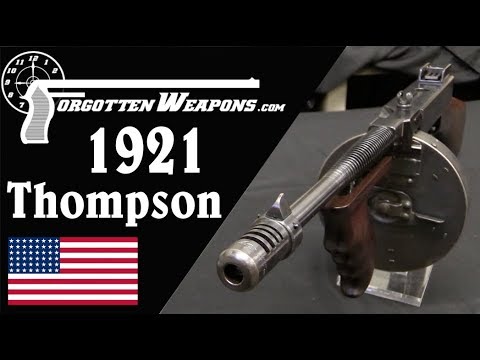
This video provides an expert-level comparison of two primary Thompson submachine gun variants: the ornate pre-war 'Gangster' model and the simplified, cost-effective wartime production version. The instructor, demonstrating high authority, highlights key mechanical and aesthetic differences, including barrel types, grips, magazine compatibility, and charging handle locations, emphasizing the production efficiencies gained in the wartime variant.

Quick Summary

Expert comparison of Thompson Submachine Gun variants highlights key differences: pre-war models (M1921/M1928) feature finned barrels, Cutts compensators, vertical foregrips, and drum/stick magazine compatibility. Wartime versions (M1A1) were simplified for mass production with smooth barrels, horizontal forends, stick magazines only, and side-mounted charging handles, costing less than 25% of earlier models.

Chapters

  1. 00:00Introduction to Thompson Variants
  2. 00:11Pre-War Type 1 Features
  3. 00:19Wartime GI Production
  4. 00:29Technical Details of Early Models
  5. 00:50Cost and Efficiency

Frequently Asked Questions

What are the main differences between early and wartime Thompson submachine guns?

Early Thompson models (like the M1921/M1928) featured ornate designs, finned barrels, Cutts compensators, vertical foregrips, and drum/stick magazine compatibility. Wartime versions (like the M1A1) were simplified for mass production with smooth barrels, horizontal forends, stick magazines only, and side-mounted charging handles.

Why was the wartime Thompson submachine gun simplified?

The wartime Thompson was simplified to drastically reduce production costs and speed up manufacturing for military use during WWII. This resulted in a firearm that cost less than a quarter of its pre-war predecessors, making it more accessible for mass deployment.

What caliber are Thompson submachine guns typically chambered in?

Thompson submachine guns are most commonly chambered in the .45 ACP caliber. This cartridge was chosen for its stopping power and availability, making it a standard for American small arms during the periods these iconic firearms were produced.

What distinguishes the barrel and muzzle of early Thompson models?

Early Thompson submachine guns, particularly the M1921 and M1928, are distinguished by their finned barrels, which aided in cooling during sustained fire, and the presence of a Cutts compensator at the muzzle, designed to reduce recoil and muzzle climb.

More Reviews Videos You Might Like

More from Arm&Gun

View all →