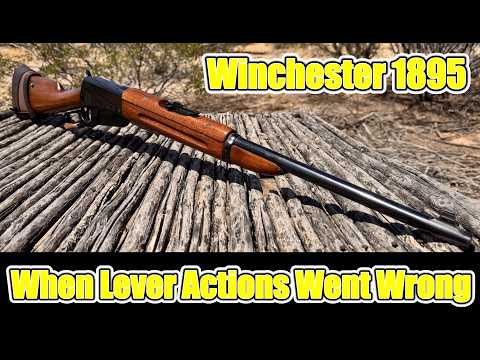
The Hidden Danger of the .30-06 in a vintage Winchester 1895

Published on May 20, 2026
Duration: 10:56

This video delves into the potential hidden dangers of chambering a vintage Winchester 1895 rifle in .30-06 Springfield. The presenter, an experienced firearms instructor, explains how the original 1895 design, initially chambered for lower-pressure cartridges like .30-40 Krag, struggles with the increased pressures of .30-06. This can lead to receiver stretch, bolt shrinkage, and deformation of the rear locking lugs, causing headspace issues and a generally worn-out action over time. The video suggests that loading .30-06 ammunition to .30-40 Krag specifications can mitigate these problems in original firearms.

Quick Summary

Vintage Winchester 1895 rifles chambered in .30-06 can experience significant wear due to higher pressures. Issues like receiver stretch, bolt shrinkage, and deformed rear locking lugs arise because the original design and metallurgy weren't intended for cartridges generating around 50,000 CUP. Loading .30-06 to .30-40 Krag pressure levels can mitigate these problems.

Chapters

  1. 00:00Introduction & Cold Recovery
  2. 00:10Winchester 1895 .30-06 Issues Overview
  3. 00:41Original Cartridges for the 1895
  4. 00:59.30-03 and .30-06 Introduction
  5. 01:19Pressure Differences: .30-40 Krag vs .30-06
  6. 01:39Metallurgy and Design Flaws in Vintage Guns
  7. 01:57Rear Locking Lug Deficiency
  8. 02:16Bolt Shrinkage and Lug Deformation
  9. 02:48Problematic Cartridges: .30-03, .30-06, 7.62x54R
  10. 03:12Summary of Vintage 1895 Problems
  11. 03:42Headspace and Safety Check
  12. 03:56Loading .30-06 to .30-40 Krag Specs
  13. 04:12Testing Reduced Pressure .30-06 Loads
  14. 04:49Comparison: Standard .30-06 vs Reduced Load Performance
  15. 05:09Historical Context: The 'Good Idea Fairy'
  16. 05:44Conclusion: Meant for Lower Pressure
  17. 05:59Modern 1895s vs. Vintage Models
  18. 06:11InRangeTV's Deep Dive Philosophy
  19. 06:22Support the Channel: Patreon
  20. 06:31Deep Gun Nerd Content
  21. 06:36Call to Action: Subscribe & Share
  22. 06:49Thanks for Watching

Frequently Asked Questions

What are the main issues with firing .30-06 in a vintage Winchester 1895 rifle?

Vintage Winchester 1895 rifles chambered in .30-06 can suffer from receiver stretch, bolt shrinkage, and deformation of the rear locking lugs due to the higher pressures of the .30-06 cartridge compared to its original chamberings. This is exacerbated by the metallurgy of older firearms.

Why is the rear locking lug design a problem for higher pressure cartridges in the Winchester 1895?

The rear locking lug design means the bolt slams directly into these lugs upon firing. With higher pressure cartridges like .30-06, this repeated impact causes significant wear and deformation over time, leading to a less secure lockup and potential headspace issues.

Can .30-06 be safely fired in a vintage Winchester 1895?

While the rifle might be chambered in .30-06, firing standard full-power loads can lead to accelerated wear and potential damage. A safer approach for vintage models is to load .30-06 ammunition to lower pressure specifications, similar to the original .30-40 Krag cartridge.

Are modern Winchester 1895 rifles susceptible to the same problems?

No, modern Winchester 1895 rifles, typically manufactured by Miroku, utilize modern steel alloys that are significantly stronger and more capable of handling the pressures of .30-06. While the rear locking lug design is still present, the improved metallurgy prevents the same wear and tear seen in vintage models.

More Reviews Videos You Might Like

More from InRangeTV

View all →