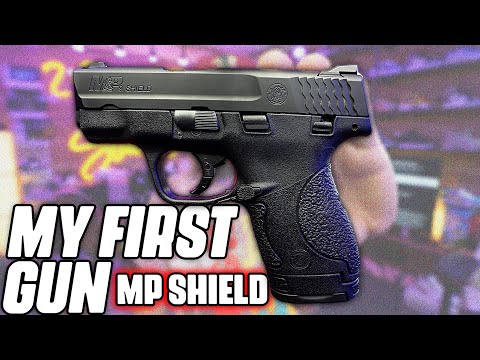
The Legendary M&P Shield - 10 Years Later

Published on November 12, 2025
Duration: 28:42

This comprehensive 10-year review of the Smith & Wesson M&P Shield 1.0 covers its history, pros, and cons. The presenter, drawing on extensive personal experience with thousands of rounds, critiques the firearm's aesthetics, grip, barrel length's impact on hollowpoint performance, trigger mechanism, and slide tension. While acknowledging its reliability, American manufacturing, and concealability, the review highlights significant drawbacks compared to modern alternatives, particularly regarding ergonomics and capacity. The presenter suggests the .45 ACP variant might offer a slightly better shooting experience than the 9mm for this specific model.

Quick Summary

The Smith & Wesson M&P Shield 1.0, despite its decade-long presence and proven reliability, suffers from significant ergonomic drawbacks. Its slick, thin grip hinders control, the short barrel impacts hollowpoint performance, and the slide tension is excessively high. While American-made and highly concealable, modern alternatives generally offer superior handling and capacity.

Chapters

  1. 00:00Introduction & History
  2. 01:48The Shield's History & Release
  3. 03:14Personal Journey & Early Carry Options
  4. 06:54Cons: Aesthetics & Grip
  5. 11:13Cons: Barrel Length & Hollowpoint Performance
  6. 13:56Cons: Trigger Mechanism Issues
  7. 16:43Cons: Slide Tension & Reciprocity
  8. 19:20Cons: Size to Capacity Ratio
  9. 21:40Pros: American Made & Concealability
  10. 23:15Pros: Metal Components & Reliability
  11. 23:49Pros: Cost & Overall Reliability
  12. 25:59Overall Thoughts & Summary
  13. 26:25Pro: Safety Feature Analysis
  14. 27:32Conclusion: Is it Still a Good Pistol?

Frequently Asked Questions

What are the main drawbacks of the Smith & Wesson M&P Shield 1.0?

Key drawbacks include its unappealing aesthetics, extremely slick and thin grip that hinders control, a short barrel impacting hollowpoint performance, a trigger mechanism prone to over-travel issues, and excessively high slide tension making manipulation difficult for some shooters. Its size-to-capacity ratio is also considered poor by modern standards.

What are the strengths of the Smith & Wesson M&P Shield 1.0?

The M&P Shield 1.0 is praised for being American-made, offering excellent concealability due to its slim profile. It features metal guide rods and sights from the factory. Crucially, it boasts exceptional reliability, with no reported malfunctions over a decade of extensive use, and its manual safety is considered well-designed for specific carry scenarios.

How does the M&P Shield 1.0's barrel length affect its performance?

The 3.10-inch barrel of the M&P Shield 1.0 is considered short, potentially limiting the velocity needed for optimal hollowpoint expansion. Competitors with slightly longer barrels, like the Glock 43 (3.41 inches) or Glock 43X/48 (4.17 inches), are generally better suited for achieving reliable terminal ballistics with defensive ammunition.

Is the M&P Shield 1.0's trigger problematic?

Yes, the trigger has a notable issue where a safety nub designed to limit over-travel can fail. The trigger can go 'over the nub,' causing it to temporarily cease functioning and requiring manual reset. This issue, along with a trigger pull weight described as around 5.5-6 pounds, makes it less desirable than many modern striker-fired pistols.

Who is the M&P Shield 1.0 best suited for today?

Given its significant ergonomic and capacity drawbacks compared to modern alternatives, the M&P Shield 1.0 is best suited for budget-conscious buyers who prioritize extreme concealability and proven reliability above all else. The .45 ACP variant is suggested as potentially offering a slightly better shooting experience than the 9mm for this specific model.

Related News

All News →

More Reviews Videos You Might Like

More from Trench Grenade

View all →