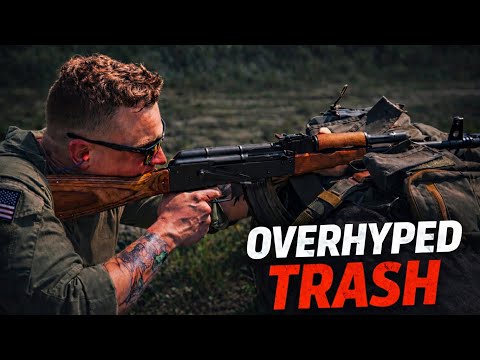
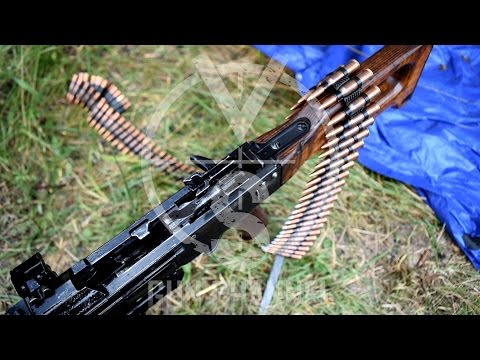
VSKA 5000rd Test// 1500 Round Debrief (Part 3)

Published on April 18, 2019
Duration: 8:43

This video debriefs the VSKA rifle after approximately 1500 rounds. The presenter details wear patterns on the bolt, trunnion, carrier, and hammer, noting surprising polishing on locking lugs but chewing on the bolt face. A Dykem test indicates a rebalancing of stress towards the primary locking lug. Three malfunctions are discussed: a hammer follow, a double feed, and a slam fire, with the latter being a point of concern for VSKA rifles.

Quick Summary

After 1500 rounds, the VSKA rifle's headspace remains within acceptable limits, confirmed by go/no-go gauge tests. Wear analysis shows polished bolt lugs but a chewed bolt face, while the Dykem test indicates a favorable rebalancing of stress towards the primary locking lug. Three malfunctions occurred: a hammer follow, a double feed, and a slam fire.

Chapters

  1. 00:03Headspace Check with Go/No-Go Gauge
  2. 00:31Field Gauge Measurement
  3. 00:511500 Round Debrief Introduction
  4. 01:04Bolt Locking Lug Wear
  5. 01:13Bolt Face Wear Analysis
  6. 01:26Trunnion Locking Lug Condition
  7. 01:45Carrier and Trunnion Stop Surface Polishing
  8. 02:01Carrier Rail Deformation
  9. 02:18Carrier Tail and Hammer Peening
  10. 02:33Carrier and Rear Trunnion Interaction
  11. 02:48Hammer Wear Analysis
  12. 03:28Piston Head and Staking Condition
  13. 03:41Hammer Spring Flex Observation
  14. 03:54Receiver Polishing from Charging Handle
  15. 04:13Barrel and Gas Block Greening
  16. 04:36C39V2 Dust Cover Fit
  17. 04:59Dykem Test Introduction
  18. 05:32Initial Dykem Test Imbalance
  19. 05:43Post-Test Dykem Rebalance
  20. 06:14Test Matrix and Round Count
  21. 06:31Malfunction 1: Hammer Follow
  22. 07:00Malfunction 2: Double Feed
  23. 07:45Malfunction 3: Slam Fire Event
  24. 08:18Debrief Conclusion and Next Steps

Frequently Asked Questions

What is the headspace status of the VSKA rifle after 1500 rounds?

After approximately 1500 rounds, the VSKA rifle's headspace remains within acceptable limits. This was confirmed using a go/no-go gauge, indicating the firearm is still functioning safely in this regard.

What are the key wear points observed on the VSKA rifle after extensive testing?

Key wear points include polished bolt locking lugs, a chewed bolt face, flattened corners on trunnion secondary locking lugs, deformation on the carrier rail, and peening between the carrier tail and hammer. Impact polishing is also noted on carrier and trunnion stop surfaces.

What does the Dykem test reveal about the VSKA's bolt and trunnion interaction?

The Dykem test indicates a rebalancing of stress towards the primary locking lug, which is a positive sign. This suggests the firearm is not losing headspace and the components are interacting favorably after the test period.

What malfunctions occurred during the VSKA's 1500-round test?

Three malfunctions were recorded: a hammer follow (user-induced), a double feed attributed to magazine failure, and a slam fire event. The slam fire is highlighted as a potential concern for this rifle model.

More Reviews Videos You Might Like

More from The VSO Gun Channel

View all →