WW2 Gun Production | The Beginning vs. The End

Published on December 31, 2022
Duration: 24:46

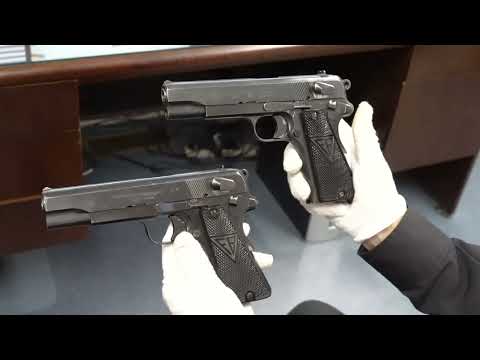
This video provides a detailed comparison of World War II handgun production from the beginning to the end of the war, focusing on changes in manufacturing processes and finishes. It highlights how the US maintained high production quality with minimal changes, primarily shifting from blued to Parkerized finishes for cost and speed. In contrast, German production saw significant degradation, moving from high-polish blued finishes to rougher phosphate finishes and increased machining marks due to wartime pressures and resource shortages. The video examines specific models like the 1911 A1, Radom VIS, Mauser HSC, CZ 27, and Walther P38, illustrating the evolution of their manufacturing.


Quick Summary

WWII handgun production evolved significantly, with US manufacturers like Colt maintaining high quality and shifting to Parkerized finishes for efficiency. Conversely, German production, exemplified by models like the P38 and Radom VIS, saw a marked decline from early high-polish blued finishes to late-war rough phosphate finishes and crude machining due to wartime pressures.

Chapters

  1. 00:00Introduction to WWII Gun Production Series
  2. 00:48US Army Handgun Production (1911 A1)
  3. 01:56US Production: Blued vs. Parkerized Finish
  4. 02:39German Handgun Production: Radom VIS (Early)
  5. 03:14German Handgun Production: Radom VIS (Late War)
  6. 04:00German Production: Machining Marks and Phosphate Finish
  7. 04:40German Production: Grip Changes and Logo Removal
  8. 05:15Mauser HSC Production Changes
  9. 05:47Mauser HSC: Logo and Magazine Bottom Changes
  10. 06:10Mauser HSC: Wood vs. Plastic Grips and Late Logo
  11. 06:40Mauser HSC: Early vs. Late Production Comparison
  12. 07:15Collector Value: Early vs. Late War Firearms
  13. 07:29P38 Production: Early vs. Late War
  14. 07:45CZ 27 Production: Early vs. Late War
  15. 08:33CZ 27: Phosphate Finish and Straw Color Parts
  16. 09:30P38 Production: Hidden Extractor and Mismatched Parts
  17. 09:58Walther P38: Early Contract vs. Late War Production
  18. 10:43P38: Dual Tone Finishes and Machining Marks
  19. 11:01P38: Late War Mismatched Production and Inspection
  20. 11:41Spreewerk P38: Late War Production and Cog Hammer
  21. 12:33Spreewerk P38: Unhardened Metal and Potential Cracks
  22. 12:58Sauer 38H Production: Early vs. Late War
  23. 13:34Sauer 38H: Safety Lever Removal and Painted Sights

Frequently Asked Questions

What were the main production changes in US handguns during WWII?

US handgun production, primarily the 1911 A1, saw minimal changes. The main shift was from a blued finish to a Parkerized finish, adopted for cost-effectiveness and faster manufacturing. The US maintained consistent quality due to abundant resources and lack of direct enemy bombing.

How did German WWII handgun production change from the beginning to the end of the war?

German production quality significantly degraded. Early war handguns featured high-polish blued finishes. By late war, production shifted to rougher phosphate finishes, increased machining marks, simplified features (like removing extra safety levers), and often mismatched parts due to wartime pressures and resource scarcity.

What is the difference between blued, Parkerized, and phosphate finishes on firearms?

Blued finishes offer good corrosion resistance and aesthetics but are labor-intensive. Parkerized and phosphate finishes are conversion coatings that provide a matte, non-reflective surface and moderate corrosion resistance, achieved through chemical processes that are faster and cheaper, making them ideal for mass wartime production.

Why did the quality of German firearms decline during WWII?

The decline was due to intense wartime demands, Allied bombing disrupting production, and severe resource shortages. Manufacturers had to prioritize speed and volume over meticulous finishing, leading to cruder machining, less durable finishes, and simplified designs to ensure weapons could be produced and fielded.

Related News

All News โ†’

More Reviews Videos You Might Like

More from Legacy Collectibles

View all โ†’