50cal vs 100 year old safe

Published on June 27, 2021
Duration: 16:04

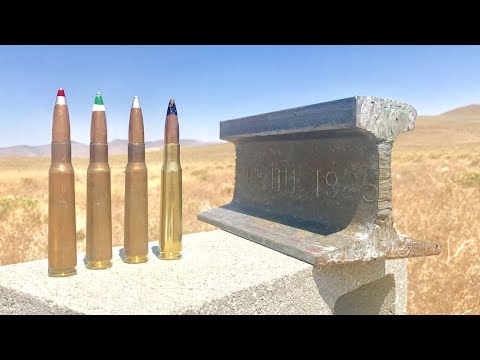
This video features Edwin Sarkissian, an enthusiast with high authority in firearms entertainment, testing the penetration capabilities of various calibers and firearms against a 100-year-old WWI safe. He demonstrates the limitations of 9mm, .50 AE, .500 S&W Magnum, .308 AP, .416 Barrett, and even .50 BMG API rounds against the robust steel construction. The testing highlights the significant power of larger calibers but also the extreme durability of vintage safes.

Quick Summary

In a test by Edwin Sarkissian, a 100-year-old WWI safe proved remarkably resilient against powerful firearms. While .50 BMG API rounds caused significant internal damage, no tested caliber, including .50 AE, .500 S&W Magnum, and .416 Barrett, fully penetrated the safe's rear, highlighting its robust construction.

Chapters

  1. 00:00Introduction and Safe Background
  2. 01:16CZ Checkmate Parrot 9mm Testing
  3. 03:29Desert Eagle .50 AE Testing
  4. 04:28S&W 500 Magnum Testing
  5. 05:56Rifle Testing: FAL and Dragunov
  6. 08:08Barrett .416 and .50 BMG Testing

Frequently Asked Questions

What firearms were tested against the 100-year-old safe?

The video tested a CZ Checkmate Parrot 9mm, a gold-plated Desert Eagle in .50 AE, a Smith & Wesson 500 Magnum, an FAL with .308 AP rounds, a Romanian Dragunov with 7.62x54R, a .416 Barrett, and a .50 BMG rifle.

Did any of the tested firearms penetrate the 100-year-old safe?

Despite testing powerful calibers like .50 AE, .500 S&W Magnum, .416 Barrett, and .50 BMG API rounds, none of the firearms fully penetrated the rear of the 100-year-old WWI safe, though significant internal damage was observed with larger rounds.

What type of ammunition was used in the S&W 500 Magnum test?

During the S&W 500 Magnum test, various Underwood Ammo loads were used, including Extreme Penetrator rounds (solid brass), Hornady hollow points, and heavy 700-grain lead flat nose projectiles.

What was the outcome of testing the .50 BMG round against the safe?

The .50 BMG Silver Tip Armor Piercing Incendiary (API) round caused substantial internal damage to the safe, including charring and material deformation, but it ultimately failed to exit the back of the safe.

More Tactical & Gear Videos You Might Like

More from Edwin Sarkissian

View all →