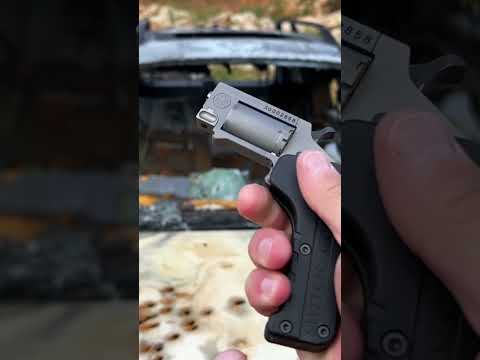
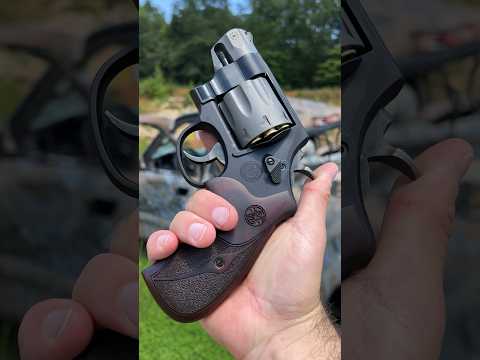
9mm Suppressor Guide

Published on January 8, 2026
Duration: 10:15

This guide details the adaptation of 9mm suppressors for various firearm types. It explains the necessity of booster assemblies for tilt-barrel handguns like Glocks and the simple conversion to a fixed-barrel setup by removing the spring and adding a spacer. The video also touches on modular suppressors and alternative mounting systems like tri-lug adapters.

Quick Summary

To mount a 9mm suppressor on a tilt-barrel handgun like a Glock, you need a booster assembly or Nielsen device. For fixed-barrel firearms, remove the booster spring and install a fixed barrel spacer to eliminate flex and ensure reliable cycling.

Chapters

  1. 00:00Introduction to 9mm Suppressors
  2. 00:57Suppressors for Tilt-Barrel Guns (Glock, S&W)
  3. 02:04Adapting Suppressors for Fixed Barrels
  4. 03:00Alternative Mounting Systems (Tri-Lug, KMO)
  5. 03:50Modular 9mm Suppressor Designs
  6. 05:11Low Back Pressure & 3D Printed Tech
  7. 06:21Suppressor Materials & Durability
  8. 06:46Dead Air Wolfman: Versatile Hard-Use Can
  9. 07:52YHM R45/R9: Durable Welded Cans
  10. 09:08Historical Context & Value of Cans
  11. 09:43Conclusion & Future Topics

Frequently Asked Questions

What is needed to mount a 9mm suppressor on a tilt-barrel handgun like a Glock?

For tilt-barrel handguns, a 9mm suppressor requires a booster assembly or Nielsen device. This component, typically threaded onto a 1/2x28 mount, allows the suppressor to flex, accommodating the barrel's tilting action during cycling.

How can I adapt a 9mm suppressor for a fixed-barrel firearm?

To adapt a 9mm suppressor for a fixed-barrel firearm, remove the spring from the booster assembly and install a fixed barrel spacer. This eliminates any flex or movement, ensuring reliable operation on platforms like Berettas or pistol caliber carbines.

What are the benefits of modular 9mm suppressors?

Modular 9mm suppressors offer versatility by allowing users to configure them into shorter, more nimble setups or longer, quieter configurations. This flexibility is ideal for different applications, from personal defense to hunting, without requiring additional paperwork for separate suppressors.

What materials are commonly used in 9mm suppressors?

Common materials for 9mm suppressors include aluminum or titanium for the baffle stack, paired with a stainless steel or titanium outer sleeve. For more rugged applications, all-stainless steel or stainless steel and titanium components are used, with some high-end cans even incorporating Inconel.

Related News

All News →

More Tactical & Gear Videos You Might Like

More from 704 TACTICAL

View all →