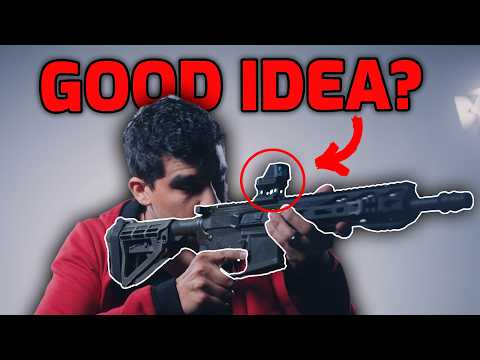
Assaulter Handgun History with "Coch" and Dorr

Published on July 10, 2024
Duration: 26:58

This video explores the evolution of the 'assaulter secondary' handgun, differentiating it from a standard sidearm by its critical role in close-quarters combat. It traces the history from the 1911, through the Sig Sauer P226 and Beretta M9, to modern platforms like the Glock 19 and Sig Sauer M17/M18. The discussion highlights key design considerations such as reliability, capacity, ergonomics, and safety features, emphasizing that effective use hinges on rigorous training.

Quick Summary

An assaulter secondary handgun is crucial for close-quarters combat, serving as a vital backup if the primary weapon fails. Historically, designs evolved from the 1911 to more reliable platforms like the Sig P226 and Glock 19, prioritizing capacity, ergonomics, and environmental resistance. Modern 9mm handguns offer advantages in capacity and effectiveness, but expert training remains the most critical factor for successful deployment.

Chapters

  1. 00:05Introduction: Assaulter Secondaries
  2. 00:31Standard Sidearm vs. Assaulter Secondary
  3. 00:42The 1911 as an Early Assaulter Secondary
  4. 01:09MP5 and the Need for a Secondary
  5. 02:01Purpose-Built 1911s and Holsters
  6. 02:441911 Reliability and Capacity
  7. 03:231911 Workhorse: Law Enforcement & Military
  8. 04:101911's Demise: Dust and Environment
  9. 04:461911 Government Contract and Supply
  10. 05:35Capacity is King in Close Quarters
  11. 06:03SAS Iranian Embassy Siege Example
  12. 06:329mm vs. .45 ACP Capacity
  13. 07:31FN Hi-Power in Europe
  14. 08:04Personal Experience with FN Hi-Power
  15. 08:46Ammunition Laws: Ball vs. Hollow Points
  16. 09:50Modern Ammunition and 9mm Effectiveness
  17. 10:31Single-Action Drawbacks: Safety Concerns
  18. 11:05Environmental Issues with Exposed Hammers
  19. 11:36Transition to Double-Action/Single-Action
  20. 11:40Beretta M9 and Sig Sauer P226
  21. 12:14Sig Sauer P226 DA/SA Design
  22. 13:33Beretta M9 Safety/Decocker Issues
  23. 14:16Sig Sauer P226 Safety and Ergonomics
  24. 15:23Glock Double-Action Trigger
  25. 16:03No Mechanical Safety on P226
  26. 16:28M9 Safety Issues and Training
  27. 17:08P226 Limitations: Size and Weight
  28. 17:22Environmental Issues with P226
  29. 18:16Adopting the Glock 19
  30. 18:33Glock 19 (Mark 27) in Service
  31. 19:04Glock 19 Grip Issues
  32. 20:02Glock as SOF Standard Issue
  33. 20:30Glock Grip Pitch and Shooting High
  34. 21:11Conventional Military: Sig Sauer M17/M18
  35. 21:34M17/M18: Best of Both Worlds?
  36. 22:19Current Fielded Handguns: P320 and Glock
  37. 22:31M17/M18 Manual Safety Training
  38. 23:07Tier 1 Units and Manual Safeties
  39. 23:41The Importance of Training
  40. 24:04Modern Handgun Availability
  41. 24:23Training Over Gear
  42. 25:29Red Dot Sights and Training
  43. 25:49Conclusion: What Makes a Secondary

Frequently Asked Questions

What distinguishes an 'assaulter secondary' handgun from a standard sidearm?

An assaulter secondary handgun is specifically chosen for its critical role in high-danger, close-quarters combat. Unlike a standard sidearm, it acts as a vital backup if the primary weapon fails, demanding immediate reliability and ease of deployment under extreme stress.

How did environmental factors influence the choice of assaulter handguns?

Environmental factors like dust, mud, and rotor wash significantly impacted handgun reliability. Early designs like the 1911, with exposed hammers, were more susceptible to malfunctions in these conditions, leading to the adoption of enclosed hammer or striker-fired designs like the Sig P226 and Glock 19.

What are the key advantages of modern 9mm handguns for assaulter roles?

Modern 9mm handguns offer a compelling combination of higher magazine capacity, improved ammunition effectiveness due to advanced bullet design, and often easier handling for follow-up shots compared to older .45 ACP single-stack designs. This makes them more forgiving and effective in high-stress situations.

Why is training emphasized over specific handgun models for assaulter roles?

Experts stress that rigorous training is paramount, regardless of the handgun platform. No amount of advanced features or 'cool gear' can replace proficiency. Consistent practice with any chosen firearm ensures it can be deployed effectively and safely when needed most.

Related News

All News →

More Tactical & Gear Videos You Might Like

More from Tactical Hyve

View all →