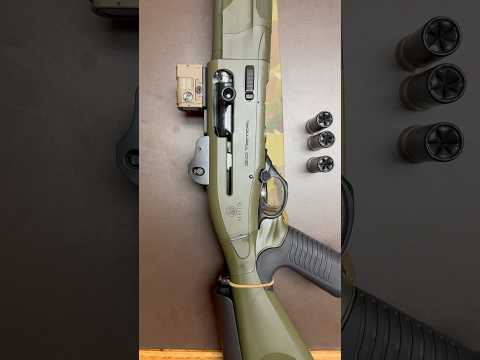
Best LPVO/Scope Mount For Rifles. Badger Ordnance Condition One Modular Mount Review.

Published on July 3, 2024
Duration: 9:39

This review of the Badger Ordnance Condition One Modular Mount highlights its versatility for LPVOs and secondary red dot optics. The mount offers options for both top-mounted and 45-degree offset red dots, with the offset design featuring in-line barrel alignment for improved downrange accuracy. The reviewer discusses various optic height options and their impact on shooting posture and recoil management, ultimately favoring the offset mount for its cheek weld capabilities despite some drawbacks with night vision use.

Quick Summary

The Badger Ordnance Condition One Modular Mount is highly regarded for its modularity, supporting both LPVOs and secondary red dot optics. A key feature is its offset red dot mount, which aligns the optic with the barrel to maintain downrange accuracy. The 1.70-inch optic height is recommended for a balanced shooting position, and torque specs are 20 in-lbs for rings and 65 in-lbs for the base.

Chapters

  1. 00:00Introduction to Badger Ordnance C1 Mount
  2. 00:14Best LPVO/Scope Mount Opinion
  3. 00:25Mount Colors & Base Price
  4. 00:33Red Dot Mount Options: Offset vs. Top
  5. 00:40What's Included in the Box
  6. 00:51Modularity & Accessory Options
  7. 01:13Scope Rings Installation
  8. 01:20Top Mounted Red Dot Example (Aimpoint T2)
  9. 01:39Offset Red Dot Mounts (45/30 Degree)
  10. 01:52Offset Mount for Vortex Razor Gen 3
  11. 02:09Offset Mount: In-line Barrel Alignment
  12. 02:39Offset Mount Positioning Options
  13. 03:01Reversible Mount for Left-Handed Shooters
  14. 03:21Offset Mount Versatility
  15. 03:42Torque Specs: Rings & Base
  16. 03:53Cantilever Mount Design
  17. 04:00Downsides of Red Dot Mounts
  18. 04:09Optic Height: 1.70" vs. Others
  19. 04:39Discussion on 1.93" Optic Height
  20. 05:00Rail to Centerline Height (3.75")
  21. 05:17Recoil & Red Dot Visibility Issues
  22. 05:35Benefits for Night Vision/Gas Masks
  23. 05:42Red Dot Alignment Preference
  24. 05:53Barricade Shots & Cheek Weld
  25. 06:11Preference for Offset Red Dot
  26. 06:23Cost of Red Dot Mounts
  27. 06:36Total System Cost Estimate
  28. 06:48Cheek Weld Comparison
  29. 07:07Choosing Between Mount Types
  30. 07:10Engaging Distant Targets with Offset
  31. 07:47Disadvantages of Top vs. Offset
  32. 08:01Back and Forth Between Mounts
  33. 08:09Necessity of Magnified Red Dot
  34. 08:27Alternative: Scalarworks LPVOs
  35. 08:52Scalarworks Mount Design Limitation
  36. 09:19Premium Scope Mount Category
  37. 09:25Conclusion & Call to Action

Frequently Asked Questions

What are the key advantages of the Badger Ordnance Condition One Modular Mount?

The Badger Ordnance Condition One Modular Mount offers significant versatility, allowing for various configurations with LPVOs and secondary red dot sights. Its key advantage is the in-line barrel alignment for offset red dot mounts, which improves downrange accuracy compared to other designs. It also provides multiple mounting positions and angles for customization.

What is the recommended optic height for the Badger Ordnance C1 mount, and why?

The reviewer favors the 1.70-inch optic height for the Badger Ordnance C1 mount. This height is considered a good balance, providing a comfortable shooting posture without excessive neck strain in standing or prone positions, while still allowing for a proper cheek weld on the rifle stock.

How does the Badger Ordnance offset red dot mount improve accuracy?

The Badger Ordnance offset red dot mount is engineered to ensure the red dot sight remains in line with the rifle's barrel. This alignment prevents the offset optic from introducing an angle that could cause point-of-impact shifts at longer distances, a common issue with less precisely designed offset mounts.

What are the torque specifications for mounting the Badger Ordnance C1 system?

For the Badger Ordnance Condition One Modular Mount, the recommended torque specification for the scope rings is 20 inch-pounds (in-lbs). The base of the mount, where it attaches to the rifle's rail, should be torqued to 65 inch-pounds (in-lbs).

More Tactical & Gear Videos You Might Like

More from Gear And Guns

View all →