CALL OF DUTY: VANGUARD CURSED GUN IMAGES

Published on November 28, 2021
Duration: 24:17

This entry analyzes the historically inaccurate firearm configurations presented in Call of Duty: Vanguard, as detailed by firearms instructor Brandon Herrera. It highlights numerous anachronisms and physical impossibilities in weapon modifications and calibers, contrasting them with real-world firearm mechanics and historical context. The analysis covers iconic weapons like the MG42, StG 44, and PPSh-41, pointing out how game design compromises historical accuracy for gameplay.

Quick Summary

Firearms instructor Brandon Herrera details historically inaccurate weapon configurations in Call of Duty: Vanguard, noting impossible modifications like a BAR in .50 BMG and anachronistic red dot sights on WWII weapons. He contrasts these with the real-world mechanics and historical context of firearms like the MG42 and StG 44.

Chapters

  1. 00:00Introduction to Cursed Gun Images
  2. 01:40Early Trailer Inaccuracies
  3. 02:26MG42 German Machine Gun Analysis
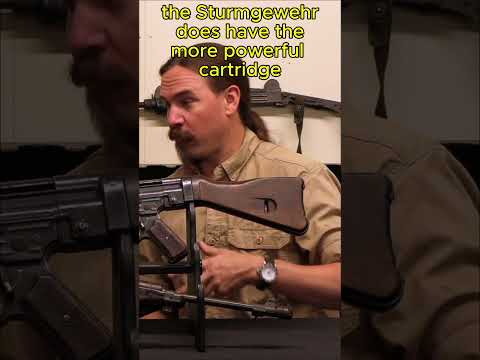
  4. 04:48StG 44 (MP44) Sturmgewehr Analysis
  5. 06:14Historical Red Dot Sights Rant
  6. 09:17MP-40 and Luger P08 Analysis
  7. 11:37PPSh-41 and PPS-43 Design Comparison
  8. 14:44AS-44 Experimental Rifle History
  9. 16:48Mosin-Nagant Bolt-Action Analysis
  10. 18:13M1911 and M1 Garand Analysis
  11. 20:07Browning Automatic Rifle (BAR) Analysis

Frequently Asked Questions

What are some historically inaccurate firearm configurations shown in Call of Duty: Vanguard?

Call of Duty: Vanguard features numerous inaccuracies, such as an MP-40 in 9mm Makarov, a Thompson in 5.7x28mm, and a BAR rechambered in .50 BMG. Modifications like unrealistic barrel shortening on the MG42 and incompatible drum magazines on the StG 44 are also highlighted.

Why are certain weapon modifications in Call of Duty: Vanguard considered physically impossible?

Modifications are impossible due to fundamental design constraints. For example, chambering a BAR in .50 BMG would require a much larger receiver, and converting a PPSh-41 into a PPS-43 by swapping frames ignores their distinct internal mechanisms and non-interchangeable parts.

When did reflector sights become practical for small arms?

Reflector sights existed in early 20th-century aircraft applications but were bulky and battery-intensive. They were not miniaturized for practical use on small arms until the 1970s, with widespread military adoption occurring in the 2000s, making their appearance on WWII weapons in Vanguard anachronistic.

What is the significance of the StG 44 in firearm history?

The StG 44 (Sturmgewehr 44) is historically significant as the world's first widely produced assault rifle. Chambered in the intermediate 7.92x33mm Kurz cartridge, it bridged the gap between submachine guns and traditional rifles.

More Tactical & Gear Videos You Might Like

More from Brandon Herrera

View all →