Can you break loose by shooting handcuffs?

Published on July 10, 2018
Duration: 11:49

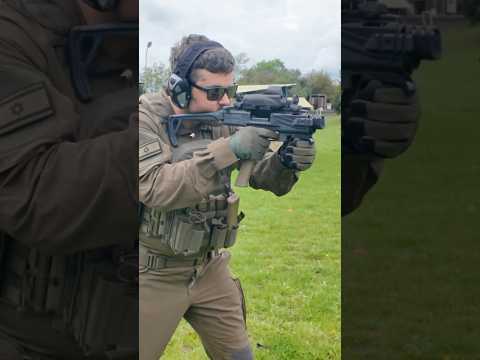
Edwin Sarkissian, a high-authority firearms content creator, conducts an experimental test to determine if police-grade handcuffs can be broken by shooting them. The experiment involves using 9mm FMJ rounds from a Glock 19X and .40 S&W hollow points from a Glock 23, neither of which successfully breaks the handcuffs. However, a 12-gauge shotgun slug proves effective in destroying the cuff structure. The video emphasizes safe firearm handling and the use of hearing protection throughout the testing process.

Quick Summary

Police-grade handcuffs are remarkably durable; standard handgun calibers like 9mm FMJ and .40 S&W hollow points failed to break them even with direct hits. However, a 12-gauge shotgun slug proved effective in destroying the cuff structure, highlighting the significant difference in power required.

Chapters

  1. 00:00Introduction and Hypothesis
  2. 01:459mm Handgun Test
  3. 07:02.40 Caliber Handgun Test
  4. 09:01Shotgun Slug Test
  5. 11:12Conclusion

Frequently Asked Questions

Can shooting handcuffs break them?

Based on testing with 9mm FMJ and .40 S&W hollow-point rounds from handguns, standard police-grade handcuffs like the Smith & Wesson M100 are highly resistant and unlikely to break. Multiple direct hits did not compromise the chain or lock.

What firearm caliber is effective against handcuffs?

While handguns proved ineffective, a 12-gauge shotgun slug demonstrated the power needed to destroy the structural integrity of police-grade handcuffs in testing. This indicates a significant difference in terminal energy required.

What is the difference between FMJ and Hollow Point ammunition?

Full Metal Jacket (FMJ) rounds have a lead core fully encased in metal, designed for penetration. Hollow Point (HP) rounds have a cavity in the tip meant to expand on impact, creating a larger wound channel and reducing over-penetration risks.

What safety precautions are necessary when testing firearm durability?

Essential safety precautions include wearing appropriate hearing and eye protection at all times. Additionally, ensuring a safe backstop is in place and adhering to all firearm safety rules is crucial for any live-fire experiment.

Related News

All News →

More Tactical & Gear Videos You Might Like

More from Edwin Sarkissian

View all →