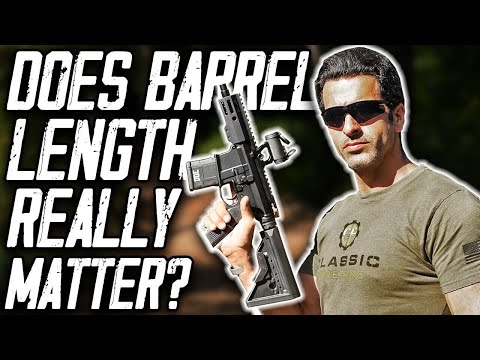
Ep 4 | THE BEST Barrel for a 9mm PCC Is… | Ultimate AR9 Build Guide

Published on September 20, 2024
Duration: 11:50

This guide explores the critical factors in selecting the best 9mm PCC barrel, focusing on length, weight, and feeding reliability. It details how barrel length impacts muzzle velocity and portability, and discusses the importance of feed cone design for different ammunition types. The video includes range testing data comparing various barrel lengths and concludes with a recommendation based on mission priorities.

Quick Summary

When choosing a 9mm PCC barrel, consider length for mission priority and ballistic performance, weight for maneuverability, and feeding reliability for ammunition compatibility. Longer barrels typically yield higher muzzle velocity, while shorter barrels offer portability at the cost of some velocity.

Chapters

  1. 00:00What is the Best 9mm PCC Barrel?
  2. 00:349mm Barrel Basics: Chamber & Bore
  3. 01:04Blowback Operation vs. Barrel Extension
  4. 01:40Muzzle Threads & Muzzle Devices
  5. 01:59Understanding Twist Rate for 9mm
  6. 02:31Key Barrel Considerations: Length, Weight, Feeding
  7. 03:06The Importance of Barrel Length
  8. 04:07Barrel Length & Ballistic Performance
  9. 05:06Barrel Weight Considerations
  10. 05:52Lightweight Barrel Options (Odin Works)
  11. 06:46Prioritizing Weight for Self-Defense
  12. 06:56Feeding Ammo Reliability (FMJ vs. Hollow Point)
  13. 07:41Enhanced Feed Cones & Feed Ramps
  14. 08:07Range Testing: Muzzle Velocity Comparison
  15. 08:22Testing Criteria & Setup
  16. 09:15Muzzle Velocity Test Results
  17. 10:07Is the Barrel Too Long? Velocity Loss?
  18. 10:36Final Barrel Selection for the Build
  19. 11:24Next Steps: Muzzle Device/Silencer

Frequently Asked Questions

What are the main differences between a 9mm PCC barrel and a standard AR-15 barrel?

A 9mm PCC barrel has a different chamber and bore size to accommodate the wider 9mm bullet. Unlike traditional AR-15 barrels with barrel extensions, 9mm PCC barrels for direct blowback systems typically use a feed cone, as the bolt does not lock into the barrel.

How does barrel length affect muzzle velocity in a 9mm PCC?

Longer barrels generally result in higher muzzle velocity because the propellant gases have more time to fully burn and exert pressure on the bullet as it travels down the barrel. For example, a 16-inch barrel can achieve significantly higher FPS than a 4.5-inch barrel.

What factors are most important when choosing a 9mm PCC barrel?

The three key factors are barrel length (influencing mission priority and ballistic performance), weight (affecting maneuverability), and feeding reliability (especially with different ammunition types like hollow points).

Can a 9mm PCC barrel be too long, leading to a loss in muzzle velocity?

While longer barrels generally increase velocity, there's a point where the propellant may be fully burned. However, for typical PCC ranges, longer barrels like 16 inches still offer higher velocities than significantly shorter ones. The trade-off is often portability versus velocity.

What is a feed cone and why is it important for 9mm PCC barrels?

A feed cone is the angled surface at the chamber of a 9mm PCC barrel that guides the cartridge. It's crucial for reliable feeding, especially with hollow-point ammunition, as older designs were optimized for FMJ bullets. Enhanced feed cones improve reliability.

Related News

All News →

More Tactical & Gear Videos You Might Like

More from AT3 Tactical

View all →