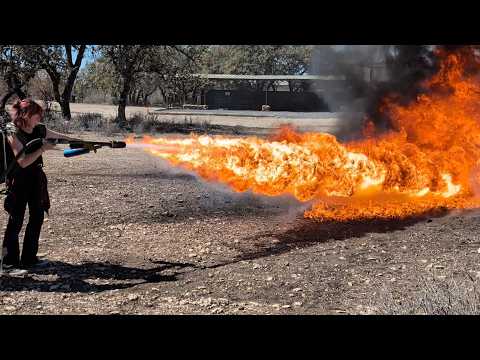
Flamethrower Q&A with Charlie Hobson

Published on May 9, 2016
Duration: 39:48

This guide details the maintenance, operation, and field resupply procedures for military flamethrowers, drawing on expert insights from Charlie Hobson. It covers operator-level maintenance, the importance of spare parts, logistical challenges of fuel and pressure bottle resupply, and safety considerations during operation. The information highlights the practical aspects of using these weapons in historical combat scenarios.

Quick Summary

Flamethrowers have been largely banned by international conventions like the 2006 protocol, though China reportedly still uses them. Hollywood depictions are often unrealistic, prioritizing drama over accuracy. Historically, they were highly effective, especially in WWII Pacific Theater combat, with technical specs like pressures up to 380 PSI and nozzle diameters around 30 caliber.

Chapters

  1. 00:28Introduction to Flamethrower Q&A
  2. 01:00International Use and Bans
  3. 01:38Hollywood vs. Reality
  4. 03:25Effective Combat Use
  5. 04:14Technical Specs: Pressure and Nozzle
  6. 05:14Flow Channel Fins and Laminar Flow
  7. 06:38Fuel Tank Ignition Risk
  8. 07:48Field Maintenance Expectations
  9. 10:04Omaha Beach Bunker Clearing Myth
  10. 11:15Reproduction Flamethrowers
  11. 12:31Flamethrower Accidents
  12. 14:29Field Resupply Logistics
  13. 19:56Effect on the Shooter (Heat & CO)
  14. 20:55Future Design Evolution
  15. 24:40Modern Role in Afghanistan
  16. 26:55Lighting Cigars with Igniters
  17. 28:04Cost of Flamethrowers
  18. 32:08Vietnam Era M9 Flamethrowers
  19. 34:00Modern 'Egg Units'
  20. 39:01Conclusion and Thanks

Frequently Asked Questions

Where have flamethrowers been used since international bans?

While international conventions have largely banned flamethrowers, China reportedly still uses them as standard issue. Most Eastern Bloc countries have phased them out. The 2006 protocol effectively removed them from widespread military use globally.

Are Hollywood flamethrower scenes realistic?

Generally, no. Hollywood often exaggerates flamethrower use for dramatic effect, using obvious props like propane torches or depicting unrealistic scenarios. Films like 'Aliens' and 'The Burning Man' are highly fictitious, and even historical dramas may invent events for excitement.

What were the technical specifications of WWII flamethrowers?

WWII flamethrowers like the M1 and M2 had pressures ranging from 125 PSI to 380 PSI to increase fuel range. Nozzle diameters were often around 30 caliber. Some models incorporated internal fins to stabilize fuel flow and prevent dribbling.

How difficult is it to ignite a flamethrower fuel tank with a bullet?

Igniting a flamethrower fuel tank with a bullet is extremely rare. It requires specific conditions: an incendiary bullet, gasoline fuel, and the bullet striking the compressed air above the fuel, not the liquid itself. Diesel fuel is non-volatile and poses less risk.

What is the cost of acquiring a functional flamethrower today?

The cost varies significantly. Rebuilt or modified units can start around $9,200. Pristine, original WWII models in good condition can range from $30,000 to $60,000, with exceptionally rare examples commanding even higher prices.

More Tactical & Gear Videos You Might Like

More from Forgotten Weapons

View all →