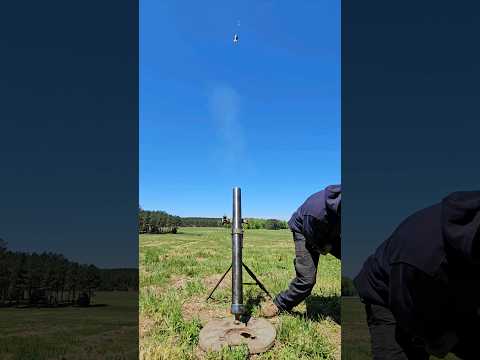
German Secret Weapon 77mm TOP PENETRATION Punching Holes in TANKS SG-113 #military #history #ww2

Published on August 11, 2024
Duration: 1:00

This entry details the German SG-113A Sondergerät 113, a unique WWII recoilless anti-tank gun. Developed by Reichswerke Hermann Göring, it fired a 45mm sabot projectile from a 77mm smoothbore barrel, designed for aircraft mounting to attack tank roofs. The weapon featured an electromagnetic sensor trigger and a counterweight recoil system. Expert analysis highlights its advanced, albeit experimental, design for the era.

Quick Summary

The German SG-113A Sondergerät 113 was a WWII secret weapon: a single-shot, 77mm recoilless anti-tank gun developed for aircraft. It fired a 45mm sabot projectile at 2100 fps, penetrating 52mm of armor, and used electromagnetic sensors for triggering.

Chapters

  1. 00:00Introduction to the SG-113 Projectile
  2. 00:10Development History of the SG-113
  3. 00:24SG-113 Design and Performance
  4. 00:41SG-113 Triggering and Recoil Mechanism
  5. 00:56SG-113 Physical Specifications

Frequently Asked Questions

What was the German SG-113A Sondergerät 113?

The SG-113A was a single-shot, 77mm recoilless smoothbore anti-tank gun developed in 1944 by Reichswerke Hermann Göring for the Luftwaffe. It was designed for ground attack aircraft to target tank roof armor.

What kind of projectile did the SG-113A fire and what was its performance?

It fired a 45mm sabot shell at 2100 feet per second, capable of penetrating 52mm of armor. The weapon used a counterweight fired in the opposite direction to cancel recoil.

How was the SG-113A triggered and mounted?

The weapon was triggered by electromagnetic sensors detecting magnetic fields around vehicles. It was intended to be mounted pointing downwards on aircraft like the Focke-Wulf Fw 190.

What were the physical specifications of the SG-113A?

Each gun measured 5.25 feet in length and weighed 147 pounds when loaded. The barrel was 77mm, firing a 45mm projectile.

More from Ordnance

View all →