Hard Body Armor vs Soft Body Armor on a Human TORSO, What's The Damage?!

Published on January 30, 2023
Duration: 23:47

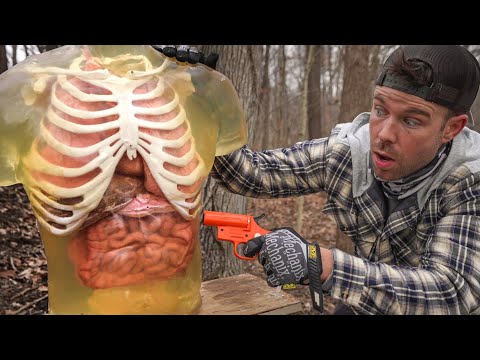
This video provides an expert-level demonstration of hard versus soft body armor performance on a realistic human torso dummy. The 1ShotTV host, exhibiting high authority in tactical gear, details the capabilities and limitations of NIJ Level IIIA soft panels and NIJ Level III hard plates against various handgun, rifle, and extreme caliber threats. The analysis highlights critical factors like backface deformation and energy transfer, emphasizing that while armor may stop a projectile, significant blunt force trauma can still occur.

Quick Summary

Hard body armor, like NIJ Level III plates, offers superior protection against rifle rounds compared to soft armor (Level IIIA), which is primarily for handguns. However, both types can cause significant blunt force trauma due to backface deformation, a critical factor in survivability.

Chapters

  1. 00:00Introduction & Gear Overview
  2. 01:39Armor Specifications Explained
  3. 03:32Soft Armor Handgun Testing
  4. 06:18Soft Armor High-Power Testing (.44 Magnum)
  5. 09:42Soft Armor Shotgun Test (12 Gauge)
  6. 10:57Hard Armor Comparison Testing (Handgun/Rifle)
  7. 14:46Hard Armor Rifle Testing (.308)
  8. 19:45Extreme Caliber Testing (.375 H&H, .45-70)

Frequently Asked Questions

What is the difference between hard and soft body armor?

Soft body armor, typically NIJ Level IIIA, is flexible and good for handgun threats but offers limited rifle protection. Hard armor, like NIJ Level III or IV plates, provides superior protection against rifle rounds but is rigid and heavier, though both can cause significant blunt force trauma.

What is backface deformation in body armor?

Backface deformation (BFD) is how much the armor pushes inward upon impact. While stopping a projectile, excessive BFD can cause severe blunt force trauma to the wearer, potentially leading to internal injuries or broken bones, even without penetration.

Can body armor stop all threats?

No, body armor has limitations. Level IIIA is primarily for handguns. Higher levels stop rifle rounds but cannot eliminate the kinetic energy transfer, which can cause severe blunt force trauma. Extreme calibers can overwhelm even hard armor's protective capacity or cause catastrophic blunt trauma.

What is the NIJ rating for body armor?

The NIJ (National Institute of Justice) rating classifies body armor's ballistic resistance. Common levels include IIIA for handguns up to .44 Magnum, III for rifle rounds like 7.62x39, and IV for armor-piercing rifle rounds. Higher numbers indicate greater protection.

More Tactical & Gear Videos You Might Like

More from 1ShotTV

View all →