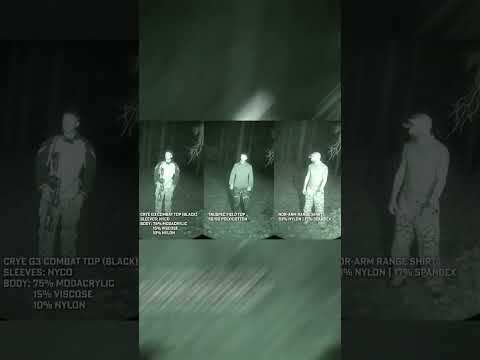
Night Vision Is Awesome

Published on May 31, 2023
Duration: 29:47

This guide details the fundamental operation and practical application of Night Observation Devices (NODs), focusing on the AGM NVG 40-3APW. It covers the technical aspects of image intensifier tubes, essential features like gain control and auto-gating, and mounting considerations. The guide also touches on aiming techniques (active vs. passive) and emphasizes the critical role of training for effective use under night vision.


Quick Summary

The AGM NVG 40-3APW night vision device utilizes Elbit Gen 3 White Phosphor tubes, boasting around 2000 FOM and a 31.6 SNR. It weighs 22.5 oz, runs for 20 hours on AA/CR123A batteries, and features manual gain control and auto-gating for optimal performance and protection.

Chapters

  1. 00:00Introduction to Night Vision
  2. 01:46Night Vision Basics and Resources
  3. 03:17Technical Overview: Analog vs. Digital
  4. 04:06Image Intensifier Mechanics
  5. 04:59Tube Specifications and Pricing
  6. 06:30Key Features: Gain and Gating
  7. 08:19Mounting and Articulation
  8. 10:08Weight and Helmet Setup
  9. 13:33Practical Application and Shooting
  10. 18:37Aiming Methods: Active vs. Passive
  11. 23:133D Printing and Future Projects

Frequently Asked Questions

What are the key technical specifications of the AGM NVG 40-3APW night vision device?

The AGM NVG 40-3APW features Elbit Systems Gen 3 White Phosphor tubes with approximately 2000 FOM and a 31.6 Signal-to-Noise ratio. It weighs 22.5 oz, offers 20 hours of battery life using AA or CR123A batteries, and includes manual gain control and auto-gating.

How does night vision technology amplify light, and what are its limitations?

Night vision devices (NODs) use image intensifier tubes with a photocathode, microchannel plate, and phosphor screen to amplify ambient light. They require some light to function and cannot see in absolute darkness without an infrared (IR) illuminator.

What are the differences between active and passive aiming with night vision?

Active aiming uses an IR laser, which is easy to use but visible to others with night vision. Passive aiming involves looking through an NV-compatible optic, like a red dot sight, offering greater stealth as it doesn't emit a visible or IR beam.

What are important considerations for mounting and wearing night vision goggles?

NODs can be heavy (e.g., 22.5 oz for the AGM NVG 40), requiring a stable helmet mount like the Wilcox G24 and counterweights for balance to prevent neck fatigue. Articulation features can help stow the unit closer to the helmet.

More Tactical & Gear Videos You Might Like

More from PSR

View all →