This discussion highlights the impracticality of civilian belt-fed AR-15 conversions with FRTs due to reliability and barrel change limitations, emphasizing the need for a team and proper support. It contrasts this with the effectiveness of shorter, reliable firearms like 11.5-inch SBRs with pistol braces for civilian use. The conversation also delves into optic choices, advocating for red dots or LPVOs based on user needs and training, while stressing the importance of mastering fundamental skills and understanding tactical standards.
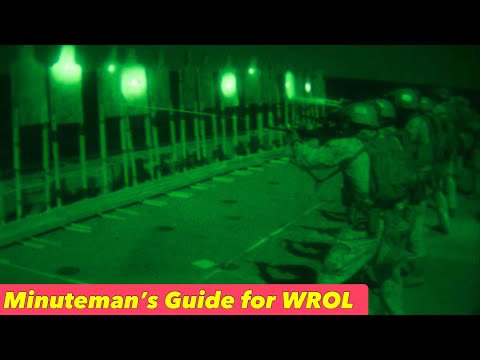
This guide details how to properly zero an IR laser device for night vision use, emphasizing the importance of confirming zero at 100 meters. It contrasts the correct method with a field expedient approach and highlights the need for active aiming over passive aiming for most scenarios. The instructor, with extensive night fighting experience, stresses practical application over internet-derived misinformation.
This video provides a comprehensive guide to building firearms for night vision use, emphasizing modularity, compactness, and user ergonomics. The instructor, Kyle from 4MR Ranch, details considerations for various platforms, including PCCs, rifles with magnified optics, and handguns. Key takeaways include the benefits of 4-in-1 devices, the importance of suppressors, strategic optic and accessory mounting to avoid shadowing and ensure ambidextrous control, and the utility of risers for comfortable shooting under nods. The discussion also covers budget-friendly options and advanced mounting solutions for optimal performance.
This video provides a foundational overview of different night vision device (NVD) types, including monocular PVS-14s, dual-tube systems (like RNVGs), and quad-tube systems. It highlights key differences in field of view, weight, power requirements, and cost, emphasizing that the best choice depends on individual needs and budget. The discussion also touches on active vs. passive aiming and the importance of IR lasers for target acquisition in low-light conditions.
This video offers practical advice for civilian night vision users, focusing on intermediate-level techniques. It covers essential setup like proper NVG focusing and advanced methods such as using dual tubes for bifocal vision and optimizing aiming with passive and active systems. The instructor emphasizes the importance of consistent practice for effective movement and situational awareness under night vision.
This video demonstrates the '4 Aces' drill, contrasting active and passive aiming techniques. It highlights the use of an optic for passive aiming versus an IR illuminator for active aiming, emphasizing the importance of training both methods for comprehensive proficiency. The drill involves timed shooting sequences with reloads and target checks.
This guide breaks down the discrepancies between night vision technology in Escape from Tarkov and real-world applications. It highlights how the game simplifies complex NVG features like field of view, tube generations, autogating, and aiming methods. The analysis, drawing on expert knowledge from Brass Facts, emphasizes the technical nuances often missed in game simulations, providing a critical look at Tarkov's realism in this domain.
This video showcases the "4 Aces" drill performed under Night Optical Devices (NODs), highlighting the use of active aiming techniques. The content focuses on practical application of firearm skills in low-light conditions. While specific firearm models and calibers are not explicitly mentioned in the provided data, the drill and technology imply advanced firearm handling and tactical training. The video aims to demonstrate proficiency with specialized equipment during a challenging shooting exercise.
This video from Spiritus Systems explores the debate between active and passive aiming techniques when using night vision for shooting. Instructor Adam emphasizes that both methods are valid and necessary, depending on the situation. Active aiming, using IR lasers or lights, is crucial for PID and operating in unnatural positions, while passive aiming offers superior stealth. The video demonstrates this through practical drills like 'Four Aces,' 'VTAC 1 to 5,' and 'Accelerator,' highlighting the speed and accuracy differences experienced by shooters Braxton and Adam.
This video explores the effectiveness of passive aiming versus active aiming with night vision devices. The instructors conducted drills with rifles and pistols under low-light conditions to compare the two methods. They found that while passive aiming is possible, especially with higher-end night vision tubes and good ambient light, active aiming with IR lasers generally proved faster and more accurate, particularly during dynamic shooting and movement. The quality of the night vision equipment significantly impacts passive aiming performance.
This YouTube Shorts video focuses on the practical differences between active and passing aiming techniques, specifically within the context of night vision (NVG) and range time. It highlights the use of BCM (Bravo Company Manufacturing) equipment, suggesting a focus on AR-15 platform firearms, and the application of these aiming methods under low-light conditions. The video aims to provide insights into improving shooting accuracy and efficiency with night vision gear.
This guide details the fundamental operation and practical application of Night Observation Devices (NODs), focusing on the AGM NVG 40-3APW. It covers the technical aspects of image intensifier tubes, essential features like gain control and auto-gating, and mounting considerations. The guide also touches on aiming techniques (active vs. passive) and emphasizes the critical role of training for effective use under night vision.
Gun Laws by State
Read firearms regulations for all 50 states + D.C.
Find Gun Dealers
Search licensed FFL dealers near you.