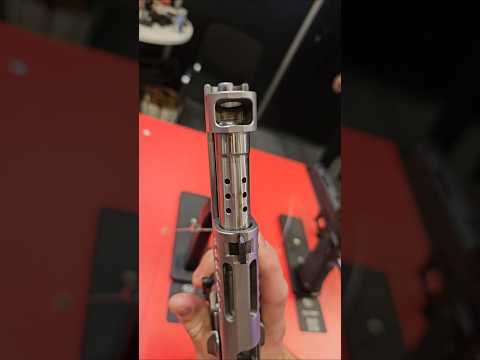
Red Dot Optics on Combat Pistols | Tactical Rifleman

Published on March 26, 2021
Duration: 31:49

This video argues that red dot optics are the future of combat pistols, offering significant advantages in target acquisition and engagement, especially under stress. The primary challenge for users is retraining muscle memory to effectively acquire the red dot upon presentation, a process requiring thousands of repetitions. The instructor emphasizes the importance of enclosed emitters for reliability in combat conditions and discusses various reticle options, highlighting the ACSS Vulcan as a beneficial design for both close-quarters and distance shooting.

Quick Summary

Red dot optics are becoming standard on combat pistols because they allow shooters to maintain focus on the threat, simplifying engagement and improving speed under stress. The main challenge is retraining muscle memory, requiring thousands of repetitions to adapt the draw stroke for immediate dot acquisition, as the dot is only visible at full presentation.

Chapters

  1. 00:08Sponsor: Global Ordnance
  2. 00:33Introduction: Red Dots on Pistols
  3. 01:53Cons of Red Dots: Difficulty Finding the Dot
  4. 02:35Advantage: Focal Plane and Combat Shooting
  5. 04:18Iron Sights vs. Combat Shooting Challenges
  6. 05:22Fight or Flight and Focal Plane
  7. 06:36Red Dots in Combat: Maintaining Focal Plane
  8. 08:14Why Red Dots Can Seem Slower Initially
  9. 09:01Modifying Muscle Memory for Red Dots
  10. 10:14Repetitions Needed to Change Muscle Memory
  11. 11:48Overcoming the 'Can't Find My Dot' Con
  12. 12:33Reticle Options: Big Dot vs. Small Dot
  13. 14:00Reticle Designs: Circle with Dot, Chevron
  14. 16:35Critical Feature: Enclosed vs. Exposed Emitters
  15. 19:38Problems with Exposed Emitters
  16. 20:07Recommended Enclosed Emitter Optics
  17. 20:30Aimpoint Acro (The Mailbox)
  18. 20:44Holosun Enclosed Emitter Option
  19. 21:04Caution: Caps vs. Sealed Enclosed Emitters
  20. 21:59Accuracy Benefits of Red Dots
  21. 23:21Battery Life Considerations
  22. 24:36Solar Panels and Shake Awake Features
  23. 26:32Finding the Dot in Odd Positions
  24. 27:22ACSS Vulcan Reticle Explained
  25. 29:42Conclusion: The Future of Combat Pistols
  26. 30:22Final Recommendations: Enclosed Emitter & Reticle

Frequently Asked Questions

Why are red dot optics becoming standard on combat pistols?

Red dot optics allow shooters to maintain focus on the threat, eliminating the need to shift attention between sights and target. This is crucial in combat scenarios where eyes naturally stay locked on the threat, simplifying engagement and improving speed under stress.

What is the main challenge when transitioning from iron sights to pistol red dots?

The primary challenge is retraining muscle memory. Traditional training focuses on acquiring the front sight first. With a red dot, the sight isn't visible until full presentation, requiring thousands of repetitions to adapt the draw stroke for immediate dot acquisition.

What type of red dot emitter is best for combat pistols?

Enclosed emitters are strongly recommended for combat pistols. They protect the emitter from environmental elements like water, mud, and dust, ensuring reliability in harsh conditions, unlike exposed emitters which are vulnerable to contamination.

How does the ACSS Vulcan reticle help with red dot acquisition?

The ACSS Vulcan reticle features a chevron for precise aiming and a large outer circle. This circle acts as a guide, helping shooters quickly re-center the chevron into their field of view if the pistol is presented at an angle, significantly aiding dot acquisition from various positions.

How much practice is needed to master red dot presentation on a pistol?

Modifying muscle memory for red dot presentation requires substantial practice, estimated at 7,000 to 9,000 repetitions. This is significantly more than initial sight acquisition training, as it involves overwriting deeply ingrained habits.

More Tactical & Gear Videos You Might Like

More from Tactical Rifleman

View all →