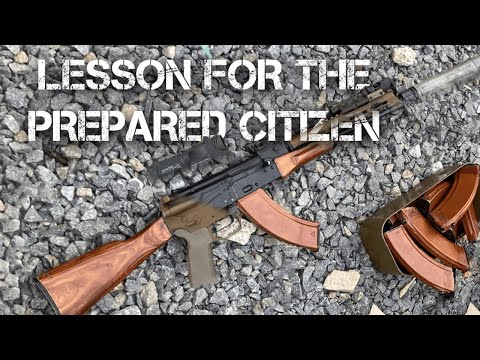
Urban Is Not CQB

Published on April 15, 2022
Duration: 15:25

This guide, based on insights from Brass Facts, emphasizes that urban environments are not solely CQB and require magnified optics for effective engagement beyond 50 yards. It details the necessity of magnification for Positive Identification (PID) and return fire, recommending versatile optics like LPVOs or ACOG/RMR combos for handling diverse urban engagement distances, particularly in 'SHTF' scenarios. The instruction highlights the importance of understanding urban geography and target presentation for appropriate gear selection.

Quick Summary

Magnification is mandatory for urban engagements beyond CQB, as distances often reach 100-300+ yards. Optics like LPVOs or ACOG/RMR combos are recommended for Positive Identification (PID) and effective return fire, addressing the complexities of urban geography and target presentation in 'SHTF' scenarios.

Chapters

  1. 00:00Urban vs CQB Introduction
  2. 01:11Scenario Context: Societal Collapse
  3. 03:12Necessity of Magnification: Small Targets
  4. 05:29Visual Range Demonstration
  5. 06:35Urban Geography and Engagement Distances
  6. 10:14Observation and Return Fire
  7. 11:43Gear Versatility for Urban Use

Frequently Asked Questions

Why is magnification essential for urban shooting scenarios?

Magnification is essential in urban environments because engagement distances often exceed 50 yards, requiring magnified optics for Positive Identification (PID) of targets and effective return fire, unlike the limited range of red dot sights alone.

What types of optics are recommended for urban engagements beyond CQB?

For urban engagements beyond CQB, versatile optics like LPVOs (Low Power Variable Optics) with magnifications up to 6x/8x/10x, or ACOG/RMR combinations are recommended to handle threats at various distances effectively.

How does urban geography impact engagement distances?

Urban geography significantly impacts engagement distances; while street widths might be around 25 yards, diagonal views down blocks or from elevated positions can easily reach 100 to 300+ yards, necessitating magnified optics.

What is PID and why is it important in urban tactical situations?

PID stands for Positive Identification, meaning clearly identifying a target as a threat before engaging. In urban settings, this is critical due to complex backgrounds and potential for non-combatants, making magnification vital for accurate assessment.

Related News

All News →

More Tactical & Gear Videos You Might Like

More from Brass Facts

View all →