Visão Noturna vs Imagem Térmica: Teste Completo com o PARD TD32

Published on August 23, 2025
Duration: 1:03

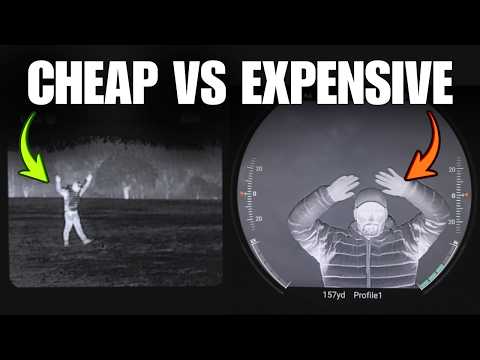
This video compares night vision and thermal imaging technologies, specifically demonstrating the PARD TD32 device mounted on a Precision Firearms rifle. It highlights the strengths and weaknesses of each technology, noting that night vision mimics normal vision while thermal imaging detects heat signatures. The PARD TD32 is presented as a versatile optic with features like a laser rangefinder and ballistic calculator.

Quick Summary

Thermal imaging excels at detecting heat signatures, making it ideal for identifying living beings or warm objects regardless of ambient light conditions. Its primary limitation is the inability to read text or discern fine details that rely on visible light, unlike night vision which mimics normal vision but can be defeated by camouflage.

Chapters

  1. 00:00Night Vision vs Thermal Intro
  2. 00:04PARD TD32 on Precision Firearms Rifle
  3. 00:18PARD TD32 Features (Rangefinder, Ballistics)
  4. 00:26Night Vision Explained
  5. 00:39Thermal Imaging Explained
  6. 00:47Thermal for Detecting Living Beings
  7. 00:51Thermal Imaging Limitations

Frequently Asked Questions

What is the main advantage of thermal imaging over night vision?

Thermal imaging's primary advantage is its ability to detect heat signatures, making it effective for identifying living beings or warm objects in complete darkness or through obscurants like smoke. This is unlike night vision, which relies on amplifying ambient light and can be defeated by effective camouflage.

What are the limitations of thermal imaging scopes?

A significant limitation of thermal imaging is its inability to read text or discern fine details that are not associated with a heat signature. This is because thermal imaging does not operate with visible light, making it less useful for identifying objects based on their visual characteristics alone.

What features does the PARD TD32 optic offer?

The PARD TD32 is a versatile optic that can function in both night vision and thermal imaging modes. It also includes advanced features such as an integrated laser rangefinder for accurate distance measurement and a ballistic calculator to assist with precise aiming.

How does night vision technology compare to normal human vision?

Night vision technology aims to replicate what the human eye sees in low-light conditions by amplifying available light. This allows for better observation in darkness, but it means that objects that are well-camouflaged during the day can remain difficult to detect at night.

Related News

All News →

More Tactical & Gear Videos You Might Like

More from Tática Civil

View all →