3 Mistakes I Made As A New Gun Owner

Published on July 21, 2020
Duration: 19:15

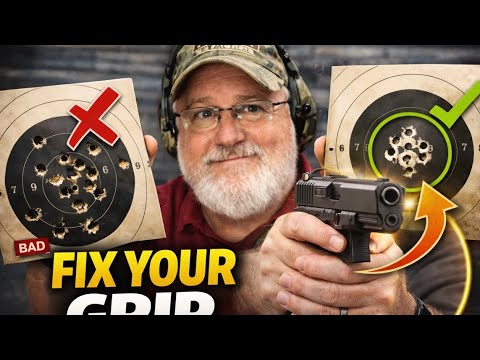
This video details common mistakes new gun owners make, focusing on grip and stance. The instructor emphasizes the "thumbs forward" grip for handguns and a forward grip on the handguard for rifles, explaining how these techniques improve recoil control and follow-up shots. A "fighting stance" with a forward lean is also recommended for stability. The importance of proper grip and stance is highlighted for both handguns and rifles, with demonstrations of less effective methods like the "teacup grip" and "magwell grip" for general shooting.

Quick Summary

The "thumbs forward" grip for handguns and a forward grip on the rifle's handguard, combined with a stable "fighting stance" that involves leaning into the firearm, are crucial for controlling recoil and improving follow-up shot accuracy. Avoiding trigger jerking and flinching by practicing a smooth trigger press and letting the shot surprise you is also key.

Chapters

  1. 00:00Channel Name Change & Intro
  2. 01:24Mistake 1: Grip (Handgun)
  3. 06:24Grip Demonstration (9mm Pistol)
  4. 07:25Mistake 1: Grip (Rifle)
  5. 08:16Mistake 2: Stance
  6. 09:06Stance Demonstration (AR-15)
  7. 09:57Mistake 3: Trigger Control & Flinching
  8. 13:16Trigger Jerking Explained
  9. 14:18Flinching Explained
  10. 16:33Identifying Flinching with Snap Caps
  11. 17:27Rifle Trigger Control & Flinching
  12. 18:19Conclusion & Final Tips

Frequently Asked Questions

What is the recommended grip for handguns to improve recoil control?

The "thumbs forward" grip is highly recommended. It involves placing your dominant hand on the pistol and wrapping your support hand around it so both thumbs point forward along the frame. This technique provides better leverage and control over muzzle rise, leading to faster follow-up shots.

How can new shooters improve their rifle stability and recoil management?

For rifles, extend your support hand as far forward on the handguard as comfortable, using it as a handstop. Combine this with a "fighting stance" where you lean into the firearm, feet shoulder-width apart, to create a stable platform that absorbs recoil effectively.

What is the difference between trigger jerking and flinching?

Trigger jerking is pulling the trigger in one large motion instead of a smooth press, causing muzzle movement. Flinching is an involuntary reaction to anticipate recoil, causing you to move the firearm just before the shot breaks, often resulting in low shots. Both negatively impact accuracy.

How can I tell if I am flinching when shooting?

A common method is to use snap caps or dummy rounds. Have someone randomly load them into your magazine. When you press the trigger and hear a click instead of a bang, it indicates you flinched in anticipation of recoil. Consistent low shots can also be a sign.

More Training & Techniques Videos You Might Like

More from 1ShotTV

View all →