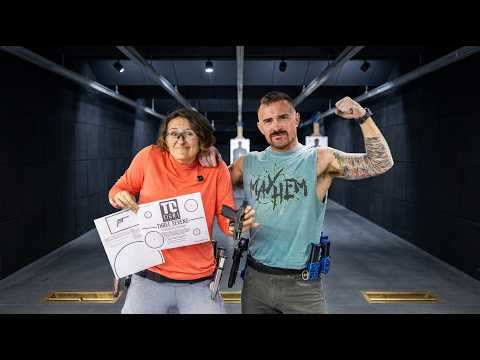
Arguing with the internet about LE training

Published on July 11, 2024
Duration: 13:30

This video discusses common issues and alternative approaches in law enforcement firearms training, emphasizing the benefits of practicing at higher speeds and accepting initial mistakes to build proficiency. It addresses the debate between competition gear and duty equipment, the impact of agency-issued firearms and holsters, and the importance of consistent practice over equipment alone. The discussion also touches on the reliability of red dot sights like the SRO and the varying levels of engagement and motivation among officers.

Quick Summary

Improving law enforcement firearms training involves pushing officers beyond their comfort zones to practice at higher speeds, accepting initial mistakes to build proficiency, and then reintroducing accountability. Consistent practice with duty-grade equipment is also crucial, as it often outweighs the impact of specialized competition gear.

Chapters

  1. 00:01Introduction: LE Training Discussion
  2. 00:37Comment 1: Practice at Speed & Accountability
  3. 01:53Speaker's Reaction to First Comment
  4. 02:16Comment 2: USPSA vs. LE Gear
  5. 04:01Comment 3: SRO Reliability
  6. 04:24Comment 4: Officer Effort & Motivation
  7. 05:25Comment 5: Flawed LE Training System
  8. 06:37Measuring Skill in LE Training
  9. 06:39Comment 6: Instructor's Experience & USPSA Influence
  10. 07:09Comment 7: Lack of Agency Training & Ammo
  11. 07:50Comment 8: Red Dot vs. Iron Sights & SRO Failures
  12. 08:25SRO Failure Story
  13. 09:16Alternative Training Strategies
  14. 09:45Comment 9: Ammo Allocation & Practice Limitations
  15. 10:25Comment 10: Range Restrictions on Rapid Fire
  16. 11:05Comment 11: SRO Story Request
  17. 12:00Comment 12: Removing Accountability in Training
  18. 12:29Example: Early Bill Drill Practice
  19. 13:22Conclusion

Frequently Asked Questions

How can law enforcement firearms training be improved?

Improving law enforcement firearms training involves pushing officers beyond their comfort zones to practice at higher speeds, accepting initial mistakes to build proficiency, and then reintroducing accountability. Consistent practice with duty-grade equipment is also crucial, as it often outweighs the impact of specialized competition gear.

What is the main difference between USPSA and law enforcement firearms training?

USPSA is a performance-based competition with measurable benchmarks, while law enforcement training is often outcome-based, focusing on achieving a certificate of proficiency without necessarily measuring advanced skill progression or consistent performance over time.

How reliable are Trijicon SRO red dot sights for duty use?

Some users report SRO red dot sights failing within hundreds of rounds, sometimes within 30 days. However, if an SRO survives its initial break-in period, it is generally expected to last for a significant number of rounds.

Why do many law enforcement officers struggle with firearms qualifications?

Officers often struggle due to a lack of effort, reluctance to adopt new training concepts, and a tendency to simply go through the motions to pass the qualification. Limited annual ammunition allocation and agency-wide lack of consistent training also contribute significantly.

Related News

All News →

More Training & Techniques Videos You Might Like

More from Ben Stoeger

View all →