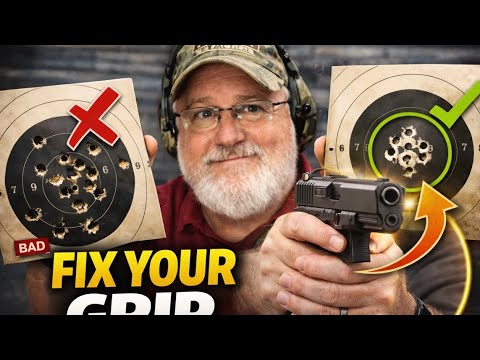
Basic Pistol Marksmanship (Grip, Part 5)

Published on August 17, 2020
Duration: 5:24

This guide details the 40/60 grip technique for pistol marksmanship, as demonstrated by expert firearms instructor Harold Cabunoc. The technique emphasizes applying 40% grip pressure with the shooting hand and 60% with the non-shooting hand, with the latter providing primary control and recoil management. Proper grip is crucial for consistent sight alignment and accurate shooting.

Quick Summary

The 40/60 grip principle in pistol shooting involves applying 40% of grip pressure with the shooting hand and 60% with the non-shooting hand. This technique, demonstrated by expert Harold Cabunoc, maximizes leverage and recoil control, with the non-shooting hand providing primary control for stability.

Chapters

  1. 00:00Grip and Sight Alignment Fundamentals
  2. 00:27Shooting Hand vs. Non-Shooting Hand
  3. 01:28The 40/60 Grip Principle Explained
  4. 01:45Shooting Hand Grip Demonstration
  5. 02:34Non-Shooting Hand Grip and Leverage
  6. 03:48Live Fire Demonstration of 40/60 Grip
  7. 05:05Conclusion: Grip Effectiveness

Frequently Asked Questions

What is the 40/60 grip principle in pistol shooting?

The 40/60 grip principle dictates that 40% of your grip pressure should come from your shooting (dominant) hand, and 60% from your non-shooting (support) hand. This technique maximizes leverage and recoil control.

How does grip affect sight alignment?

Grip directly determines sight alignment. An inconsistent grip leads to variable sight alignment, meaning the front sight, rear sight, and target won't be in the same position shot after shot, negatively impacting accuracy.

What is the role of the non-shooting hand in the 40/60 grip?

The non-shooting hand provides the majority of the grip pressure (60%) and is crucial for controlling the pistol's movement and managing recoil. It's positioned high on the grip for maximum leverage.

How should the shooting hand grip a pistol?

The shooting hand should apply about 40% of the grip pressure. The grip should be firm enough to prevent slippage but not so tight that it causes tension. Think of holding a ripe banana.

More Training & Techniques Videos You Might Like

More from Harold Cabunoc

View all →