Can You Focus on Your Front Sight and Hit a Moving Target?

Published on August 15, 2018
Duration: 6:17

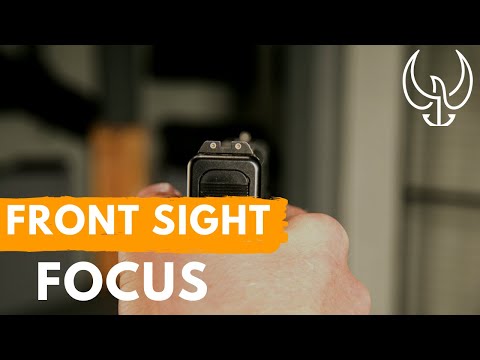
Retired Navy SEAL Chief Chris Sajnog explains and demonstrates why focusing on the front sight is crucial for hitting moving targets. He uses a simple level-as-a-tool analogy to prove that focusing on the sight (the bubble) allows for better control and accuracy compared to trying to track the target directly. This technique is essential for dynamic shooting scenarios.


Quick Summary

Retired Navy SEAL Chief Chris Sajnog explains that focusing on the front sight is crucial for hitting moving targets. He demonstrates with a level that focusing on the sight (the bubble) allows for better control and accuracy compared to directly tracking the target, which leads to significant aiming errors.

Chapters

  1. 00:00Introduction: Front Sight Focus on Moving Targets
  2. 00:26Addressing Misconceptions About Moving Targets
  3. 00:55Ballistic Truths: Sight Alignment & Miss Errors
  4. 01:10Angular vs. Parallel Shift Errors
  5. 02:05The Impact of Sight Radius
  6. 02:57Demonstration: Sight Alignment vs. Sight Picture Drill
  7. 03:51Method 1: Tracking Target Without Focusing on Bubble
  8. 04:15Method 2: Focusing on Bubble (Front Sight)
  9. 04:40Applying the Principle to Firearms Training
  10. 05:03Conclusion: Front Sight Focus is Essential
  11. 05:25Free Training Resources from Chris Sajnog

Frequently Asked Questions

Why is focusing on the front sight important for hitting moving targets?

Focusing on the front sight ensures proper sight alignment, which is critical for accuracy. When engaging moving targets, directly tracking the target is difficult and leads to errors. By focusing on the front sight, you maintain a consistent aiming point and can make necessary adjustments more effectively.

What are the two main ways to miss a target when shooting?

The two primary ways to miss a target with a two-plane sighting system are angular error, where the bullet deviates at an angle from the intended path, and parallel shift error, where your sight alignment is perfect but you are aiming at an incorrect point.

How does sight radius affect accuracy?

A shorter sight radius, the distance between the rear and front sights, makes it easier to miss your target. This requires even more precise aiming alignment to achieve accuracy, and any deviation is magnified at distance.

Can you demonstrate the principle of front sight focus for moving targets?

Yes, Chris Sajnog uses a level with a bubble. By trying to keep the bubble centered while tracking a moving target without looking at the bubble, it deviates significantly. When focusing on the bubble (representing the front sight) and using awareness for the target, the bubble stays closer to center, proving the effectiveness of front sight focus.

More Training & Techniques Videos You Might Like

More from Chris Sajnog

View all →