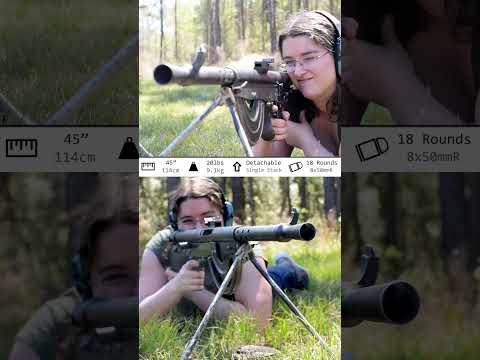
Chauchat Field Testing vs Mock MG08/15 Nest

Published on December 14, 2019
Duration: 14:18

This guide details field testing procedures for the Chauchat Mle 1915, focusing on historical tactical doctrines like 'walking fire' and evaluating its performance in semi-auto and full-auto modes. Instruction emphasizes marksmanship fundamentals and understanding the weapon's specialized role, drawing on expert analysis of its operational characteristics. The evaluation highlights semi-auto's superiority for accuracy against point targets.


Quick Summary

Expert field testing of the Chauchat Mle 1915 evaluates WWI 'walking fire' tactics and performance. The analysis highlights semi-auto's superiority for accuracy on point targets, while full-auto fire significantly reduces precision. Ergonomic considerations like recoil 'slap' are also discussed, with historical mitigation techniques mentioned.

Chapters

  1. 00:00Introduction and Objectives
  2. 00:36Walking Fire Doctrine
  3. 01:41Defensive and Offensive Tactics
  4. 03:34Semi-Auto Range Test
  5. 06:27Marksmanship Evaluation
  6. 08:47Full-Auto and Burst Fire
  7. 10:24Ergonomics and Conclusion

Frequently Asked Questions

What is the 'walking fire' doctrine discussed in relation to the Chauchat Mle 1915?

The 'walking fire' doctrine involves Chauchat gunners advancing in the front wave of an attack, firing their weapons to suppress the enemy. This tactic allowed heavy machine guns to cease fire temporarily to avoid hitting friendly troops, maintaining suppressive fire during advances.

How effective is the Chauchat Mle 1915 in semi-auto versus full-auto?

The Chauchat Mle 1915 is significantly more effective in semi-automatic mode for engaging point targets. While full-auto modes exist, accuracy drops considerably, making semi-auto the preferred method for precision shooting.

What were the key tactical uses of the Chauchat Mle 1915 during WWI?

The Chauchat Mle 1915 was used defensively in lightly manned front-line trenches to provide high firepower. Offensively, it was employed on flanks to suppress enemy positions, such as German MG08/15 emplacements, and in 'walking fire' assaults.

What ergonomic issues were noted with the Chauchat Mle 1915?

A notable ergonomic issue is the 'slap' from recoil, which can affect the sight picture. Historically, soldiers would wrap the stock in burlap to improve grip and sight alignment, mitigating this effect.

More Training & Techniques Videos You Might Like

More from Forgotten Weapons

View all →