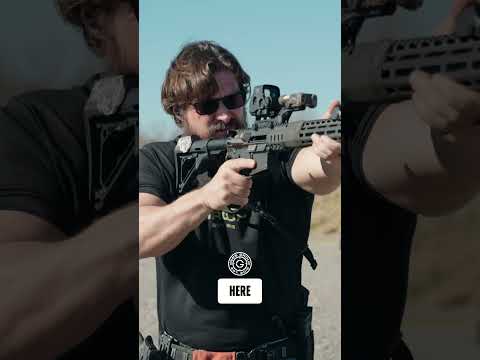
DJ'S SHOOTING TECHNIQUES - PATREON SHORTS

Published on January 3, 2025
Duration: 0:31

This guide details a practical technique for testing suppressor-induced point of impact (POI) shifts, as demonstrated by DJ Shipley from GBRS Group. It emphasizes verifying accuracy after suppressor attachment by analyzing shot groupings at 25 yards. The instruction highlights a pragmatic approach, where consistency within a defined acceptable zone is deemed sufficient for training purposes, reflecting a high level of practical expertise.


Quick Summary

DJ Shipley of GBRS Group demonstrates testing for suppressor-induced Point of Impact (POI) shifts. By firing a group of four rounds after suppressor attachment and analyzing the grouping at 25 yards, shooters can determine if the shift is acceptable for their training standards, adhering to the 'aim small, miss small' philosophy.

Chapters

  1. 00:00Introduction & Grouping Philosophy
  2. 00:17Suppressor POI Shift Testing

Frequently Asked Questions

How do you test for suppressor-induced Point of Impact (POI) shift?

Attach the suppressor to your firearm, then fire a group of four rounds at your standard training distance, typically 25 yards. Analyze the grouping to see if the point of impact has shifted compared to unsuppressed shots. Acceptable shifts depend on your training goals.

What is the 'aim small, miss small' philosophy in shooting?

'Aim small, miss small' is a shooting principle emphasizing the importance of precise aiming. By focusing on a very small aiming point, you minimize the potential for error, leading to tighter shot groupings and increased accuracy. It's fundamental for consistent performance.

Is it important to test accuracy after adding a suppressor?

Yes, it's crucial. Suppressors can alter the harmonics of a firearm barrel, potentially causing a Point of Impact (POI) shift. Testing ensures your accuracy hasn't been negatively affected and that your shots are still landing where you intend them to.

What does 'good enough' mean in firearm training according to DJ Shipley?

For practical training purposes, 'good enough' means achieving shot groupings within an acceptable, consistent zone that meets your specific training objectives. It prioritizes practical sufficiency over absolute, historical-level precision, reflecting a pragmatic approach to skill development.

More Training & Techniques Videos You Might Like

More from GBRS Group

View all →