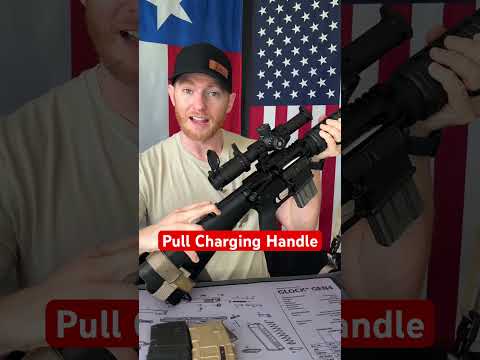
Firearm Basics: Part-3 Rifle Nomenclature & Cycle of Operation

Published on April 3, 2020
Duration: 9:15

This video provides a foundational understanding of rifle nomenclature and the cycle of operation, specifically using an AR-15 variant as an example. Instructor Ivan Kippadger explains key components like the stock, receivers, charging handle, and magazine well, detailing their functions. The video also breaks down the mechanical steps involved in firing a round, from chambering to ejection, emphasizing the importance of precise terminology for new shooters.

Quick Summary

Understanding rifle nomenclature is crucial for safe and effective firearms handling. Key components include the stock, lower receiver (grip, trigger, magazine well), upper receiver (charging handle, ejection port), handguard, barrel, and muzzle device. The cycle of operation involves chambering a round, firing, extraction, and ejection, powered by the gas system and the bolt carrier group.

Chapters

  1. 00:10Introduction to Rifle Nomenclature & Cycle of Operation
  2. 01:09Stock and Buffer Tube
  3. 01:30Lower Receiver Components (Grip, Trigger, Magazine Well)
  4. 02:04Upper Receiver Components (Charging Handle, Ejection Port)
  5. 02:29Sights (Iron Sights, Optics)
  6. 02:58Handguard and Barrel Nut
  7. 03:14Accessory Mounting Systems (M-LOK, Picatinny Rail)
  8. 03:31Front Sight Block and Muzzle Device
  9. 03:59Left Side Controls (Safety Selector, Bolt Catch)
  10. 04:52Upper and Lower Receiver Separation
  11. 04:57Internal Components (Hammer, Bolt Carrier Group)
  12. 05:29Magazine Components (Body, Follower, Spring)
  13. 06:02Ammunition Components (Primer, Case, Bullet)
  14. 07:02Cycle of Operations: Loading and Chambering
  15. 07:36Cycle of Operations: Firing and Gas System
  16. 08:14Cycle of Operations: Extraction and Ejection
  17. 08:46Conclusion and Next Steps

Frequently Asked Questions

What are the main parts of a rifle's lower receiver?

The lower receiver of a rifle typically includes the pistol grip, trigger, trigger guard, magazine release, and the magazine well where the magazine is inserted. It also houses the fire control group, including the hammer and safety selector.

How does the bolt carrier group function in a rifle's cycle of operation?

The bolt carrier group (BCG) is crucial for the semi-automatic function. It moves forward to chamber a round, locks into the barrel extension to seal the chamber during firing, and then moves rearward to extract and eject the spent casing, preparing the rifle for the next shot.

What is the purpose of the gas key on a bolt carrier group?

The gas key is located on top of the bolt carrier group. It receives high-pressure gas from the gas tube, which then directs this gas into the BCG, providing the necessary energy to cycle the action, unlocking the bolt and pushing it rearward.

Can you explain the basic components of a rifle round?

A rifle round consists of a primer at the base, which ignites when struck. This ignites the powder inside the brass case. The expanding gas from the burning powder propels the bullet, or projectile, out of the barrel.

Related News

All News →

More Training & Techniques Videos You Might Like

More from Kit Badger

View all →