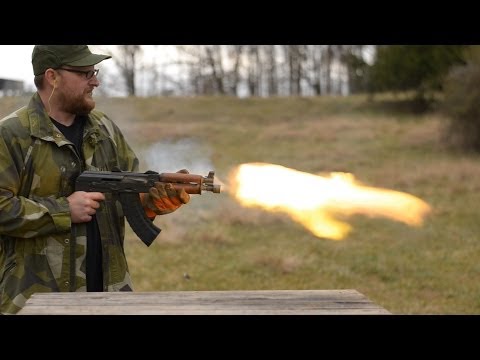
Firearms Facts Episode 24: Proper Sight Picture

Published on July 2, 2013
Duration: 14:38

This guide breaks down proper sight picture techniques for various firearm sighting systems, including iron sights (Mauser, pistol three-dot), red dots, and specialized reticles like Mil-Dot and PSL rangefinding. It emphasizes correct alignment, understanding reticle functions, and avoiding common issues like improper eye relief. The instruction is delivered with high authority by firearm experts Barry and Eric.

Quick Summary

Mastering a proper sight picture is crucial for firearm accuracy. This involves precise alignment of front and rear sights, focusing on the front sight, and understanding different reticle types like Mil-Dots for rangefinding or the parallax-free nature of red dots. Avoiding issues like the 'halo effect' from improper eye relief ensures consistent aiming.

Chapters

  1. 00:00Introduction to Sight Pictures
  2. 01:11Mauser and Bead Sights
  3. 01:57Pistol Sights
  4. 02:29Red Dot Sights
  5. 03:27Diopter Sights
  6. 04:59Duplex and Target Reticles
  7. 05:59Rangefinding and Mil-Dot Scopes
  8. 08:41PSL and Euro Style Reticles
  9. 11:21Halo Effect and Eye Relief
  10. 12:18Red Dot Advantages

Frequently Asked Questions

What is a proper sight picture for a firearm?

A proper sight picture involves aligning the front sight post precisely within the rear sight aperture or notch, ensuring equal light on both sides of the front sight, and focusing on the front sight itself for a clear aiming point.

How do red dot sights differ from iron sights in terms of aiming?

Red dot sights project a single aiming point (the dot) onto the lens, which is parallax-free, allowing for faster target acquisition. Iron sights require aligning three distinct points: the front sight, the rear sight notch, and the target.

What is the 'halo effect' in firearm optics?

The 'halo effect' occurs with magnified scopes when eye relief is incorrect, causing a dark ring or 'halo' around the edge of the field of view, which restricts vision and hinders accurate aiming.

What is a Mil-Dot reticle used for?

A Mil-Dot reticle features hash marks (dots or lines) that represent one Mil (approximately 3.6 inches at 100 yards or 10cm at 100 meters). These are used for estimating range to a target and for calculating bullet drop or windage corrections.

Related News

All News →

More Training & Techniques Videos You Might Like

More from Iraqveteran8888

View all →