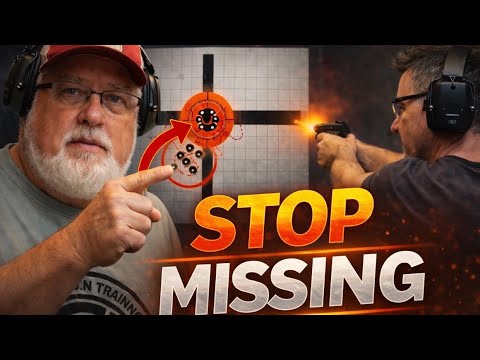
Flinch and recoil control are the same thing

Published on September 28, 2024
Duration: 18:29

This video argues that flinching and recoil control are fundamentally the same issue: timing. The host differentiates between 'pre-ignition push' (flinch) and 'post-ignition push' (recoil control), emphasizing that effective shooting requires timing the push to occur after the shot breaks. Techniques like dry fire and understanding trigger feel are crucial for improvement, and shooters must learn to suppress this response for precision tasks like zeroing.

Quick Summary

Flinching and recoil control are essentially the same issue: timing. Flinching is a 'pre-ignition push' before the shot, while recoil control is a 'post-ignition push' after the shot. Effective shooting requires timing your push to happen only after the shot breaks.

Chapters

  1. 00:00Handgun Shooting Challenges & Myths
  2. 02:17Flinch vs. Recoil Control: The Timing Connection
  3. 04:52Sponsor: Venture Surplus MRE Review
  4. 09:08Improving Recoil Control Timing Techniques
  5. 11:14Precision Shooting: Turning Off Recoil Control
  6. 12:43Ball and Dummy Drill Analysis

Frequently Asked Questions

What is the main difference between flinching and recoil control in shooting?

According to the video, flinching and recoil control are fundamentally the same issue: timing. Flinching is a 'pre-ignition push' before the shot, while recoil control is a 'post-ignition push' after the shot. Effective shooting requires timing your push to happen only after the shot has broken.

How can I improve my recoil control and stop flinching?

Improving recoil control and eliminating flinches involves understanding your firearm's specific trigger feel. Practice techniques like dry fire and live fire drills, focusing on timing your push to occur after the shot breaks. Developing 'throttle control' also helps manage recoil effectively.

Why is timing crucial for both flinching and recoil control?

Timing is crucial because both flinching (pre-ignition push) and recoil control (post-ignition push) are about when the shooter applies pressure to the firearm. The goal is to time this pressure application to occur *after* the shot breaks, minimizing the impact of the muzzle blast and recoil on accuracy.

Can you explain the concept of 'turning off' recoil control for precision tasks?

For precision tasks like zeroing a firearm's sights, shooters need to mentally 'turn off' their natural recoil control response. This means focusing entirely on a perfect trigger press and ignoring the anticipated recoil, ensuring the sights remain perfectly aligned during the shot.

More Training & Techniques Videos You Might Like

More from Hop

View all →