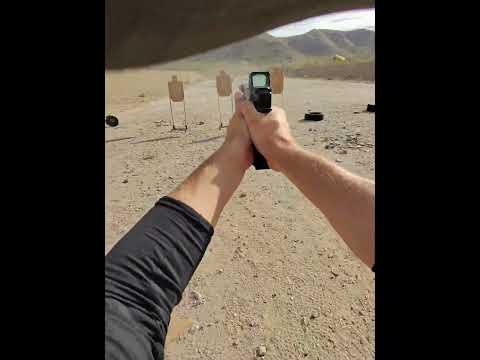
Glock angles and 40k nerds

Published on December 25, 2025
Duration: 25:06

Ben Stoeger explains occluded optic training, a method using tape on a red dot sight to force target focus and binocular vision. This technique trains shooters to rely on their natural aiming process rather than chasing the dot. He also touches on grip angles, training volume, and the reliability of Glocks, drawing on his extensive competitive shooting experience.

Quick Summary

Occluded optic training uses tape on a red dot sight to enhance target focus and binocular vision. This technique trains shooters to naturally find the dot on the target, improving alignment and shot placement by relying on focus rather than actively tracking the dot.

Chapters

  1. 00:00Intro: Q&A on Glock Grips & Shooting Nonsense
  2. 01:16Kimber 2K11 Review & Grip Options
  3. 02:12Computer Mouse Analogy for Red Dot Use
  4. 03:28Staccato Safety & Hand Size Concerns
  5. 06:50Training Volume vs. Fatigue & Recovery
  6. 08:08Warhammer 40k & Gaming Interests
  7. 12:36Glock vs. M&P Grip Angle Differences
  8. 14:38Beretta PX4 Storm & Rotating Barrels
  9. 16:34Occluded Optic Training Explained
  10. 18:48Glock Reliability & Training Value
  11. 20:05Grip Pain, Ergonomics & Technique

Frequently Asked Questions

What is occluded optic training and why is it used?

Occluded optic training involves taping the front of a red dot sight to force the shooter to focus intently on the target. This method leverages binocular vision, training the shooter to naturally find the dot on the target without consciously tracking it, improving focus and alignment.

How does Ben Stoeger compare Glock grip angles to other pistols like the M&P?

Ben Stoeger acknowledges that while Glocks are excellent, their grip angle isn't ideal for everyone. Some shooters find platforms like the M&P offer a more natural grip angle, facilitating quicker red dot acquisition and a better natural point of aim.

What is the risk of improper thumb placement on a Staccato safety?

Placing the thumb below the safety lever on a 2011-style pistol like a Staccato can cause the safety to engage during recoil, especially with .45 ACP. Proper thumb placement is crucial to avoid accidental engagement and maintain consistent operation.

Is high-volume firearm training always beneficial?

Ben Stoeger warns that extremely high-volume training (e.g., 40 hours/week) without sufficient recovery leads to fatigue and diminishing returns. Effective training requires balancing practice intensity with adequate rest and recovery cycles for optimal skill development.

More Training & Techniques Videos You Might Like

More from Ben Stoeger

View all →