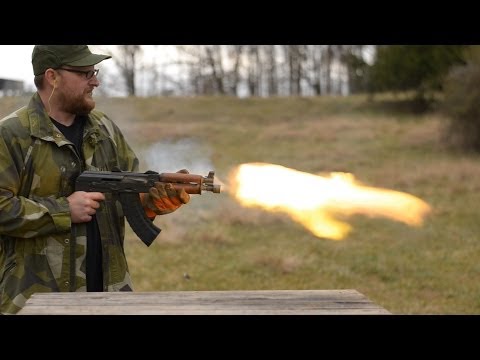
History's Deadliest Bullet...

Published on September 6, 2014
Duration: 14:02

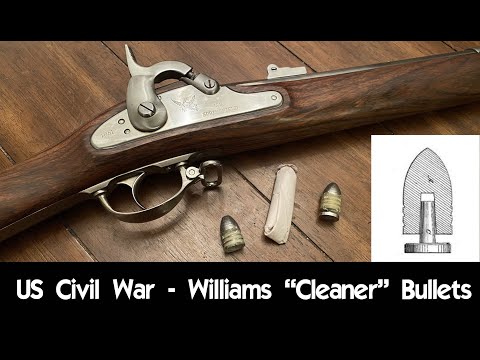
This expert-level entry details the history, ballistics, and testing of the Minié ball, a revolutionary projectile from the Civil War era. Instruction from Iraqveteran8888, featuring Eric and Kevin, covers its design, impact on warfare, and performance through ballistic gel and water tests. The content emphasizes the projectile's significant range, penetration, and destructive power, offering insights into historical ballistics and modern testing methodologies.


Quick Summary

The Minié ball, a Civil War-era projectile, dramatically increased musket range to nearly 900 yards due to its expanding hollow base skirt that engaged barrel rifling. Fired with 60-100 grains of black powder, its 575-grain lead slug delivered devastating penetration and accuracy, fundamentally changing battlefield dynamics.

Chapters

  1. 00:00Introduction to the Minié Ball
  2. 00:55Impact on Warfare
  3. 02:30Ballistic Gel Testing: Original Projectiles
  4. 07:18Testing Newly Cast Projectiles
  5. 09:55Final Demonstration

Frequently Asked Questions

What made the Minié ball so deadly during the Civil War?

The Minié ball revolutionized warfare by significantly increasing the effective range of muskets to nearly 900 yards, compared to 200-300 yards for older smoothbore muskets. This technological leap, combined with its expanding skirt for rifling engagement, led to unprecedented casualties as tactics struggled to adapt.

How does a Minié ball work?

The Minié ball is a lead projectile with a hollow base skirt. When fired, the expanding gases force the skirt outward, causing it to engage the rifling in the barrel. This imparts spin for accuracy and range, unlike smoothbore projectiles.

What are the key ballistic properties of a .58 caliber Minié ball?

A typical .58 caliber Minié ball weighs around 575 grains and is fired with a powder charge of 60-100 grains of black powder. It demonstrates significant penetration in ballistic gel, creating a large temporary cavity and deep wound channel due to its mass and velocity.

What historical firearms used the Minié ball?

The Minié ball was widely adopted by both Union and Confederate forces during the American Civil War. Common firearms that utilized this projectile include variants of the Springfield Rifle-Musket (like the 1861 model) and the Parker Hale Musketoon.

More Training & Techniques Videos You Might Like

More from Iraqveteran8888

View all →