This video from InRange discusses a historical site connected to Robert E. Lee's family, specifically focusing on a mass grave of enslaved people and the ongoing efforts to preserve it from destruction. The description also details Lee's actions as executor of his father-in-law's estate, highlighting his decision to continue profiting from enslaved labor to pay off debts, even when land sales could have been an alternative.
This video discusses an AI prediction of a second American Civil War, exploring potential scenarios. It also includes promotional content for the channel's Patreon, merchandise, and affiliated products and ministries. The content touches on political figures and their relevance to the prediction.
This YouTube video title and description suggest a speculative discussion about an Artificial Intelligence prediction of a second U.S. Civil War and how it might unfold. The content appears to lean towards political commentary and potential societal unrest, with a focus on the "God Family and Guns" brand and its affiliated channels and products. It also promotes various support initiatives, merchandise, and media presence for the channel.
This YouTube video speculates on the potential outcome of a hypothetical Second American Civil War, analyzing who might emerge victorious given current societal divisions. It touches upon the concept of civil unrest and explores hypothetical conflict scenarios. The description also includes links to various sponsors and community resources related to faith, preparedness, and firearms.
This video explores the history and significance of the Sharps Carbine, a pivotal firearm adopted by John Brown and abolitionists leading up to the US Civil War. It delves into the carbine's advanced design for the 1850s, its operational use, and its deep entanglement with the abolitionist movement and the eventual outbreak of the Civil War. This content serves as a prequel to a related video on John Brown's raid at Harper's Ferry.
This video demonstrates the loading and firing procedure for the US Civil War era Maynard Carbine, a break-action breech-loader. Instructor Karl Kasarda showcases the unique process involving a specialized brass cartridge and the lever-actuated mechanism. The demonstration highlights the carbine's efficiency compared to muzzle-loaders of the period, emphasizing proper handling and the distinct firing sequence.
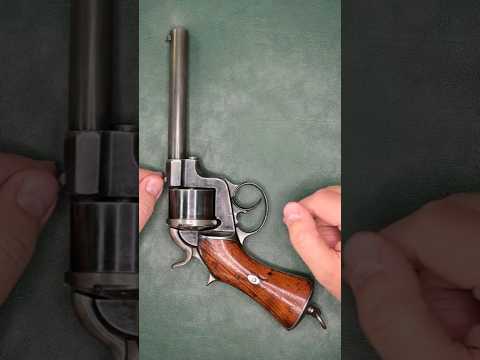
This video explores the intriguing presence of a Confederate revolver in a photograph of Geronimo, dating from the late 19th century. It delves into the historical context of the "old old west," highlighting the common use of surplus Civil War weaponry. The description explains the transitional period where percussion revolvers coexisted with cartridge long arms, providing a plausible explanation for the firearm choice. The video aims to educate viewers on historical firearms and their usage.
This video speculates on the potential front lines of a hypothetical second US Civil War, driven by increasing division within the country. It explores where conflicts might erupt, without delving into specific firearm models or technical details. The description emphasizes the channel's mission and encourages viewer support through Patreon, while also promoting various sponsors and recommended products related to preparedness and self-sufficiency.
This video speculates on the outcome of a hypothetical second American Civil War, exploring who would emerge victorious. It touches on the increasing divisions within the US and uses hashtags related to civil war. The description also includes numerous affiliate links for firearms-related products, medical kits, and other merchandise, along with calls to support the channel through Patreon and mentions of other social media platforms.
This video from InRange TV offers a brief examination of Slocum's "Side Loading" Revolver. It highlights the historical context of the Rollin White patent and how firearms designers worked around it. The Slocum revolver, manufactured for only one year in 1864, is discussed as a backup self-defense weapon utilized during the US Civil War. The video emphasizes viewer support for InRange TV through Patreon.
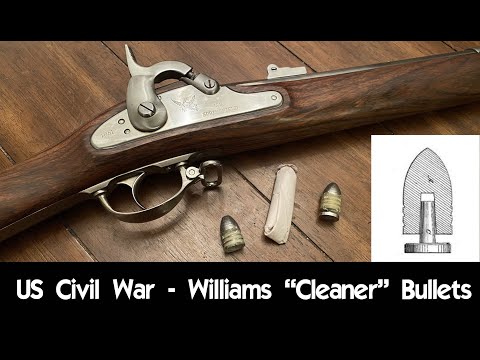
This video delves into the Union Army's use of the Williams 'Cleaner' bullet during the US Civil War, contrasting it with the standard Burton ball. It highlights the design evolution from the original Minié ball, the technical challenges of bore fouling, and the specific dimensions of the Burton (.574") and Williams (.570") bullets. Despite its intended advantages in preventing fouling and ensuring a better seal, the Williams bullet faced adoption issues and soldier dissatisfaction due to difficulties in unloading unfired rounds.
Instruction from Karl Kasarda on the historically accurate and simple field cleaning of the 1853 Enfield rifle-musket. The process emphasizes minimal tools and a water-based cleaning method to combat black powder fouling, contrasting with modern complex cleaning solutions. This method was standard for Civil War soldiers, with lock disassembly reserved for armorers.
Gun Laws by State
Read firearms regulations for all 50 states + D.C.
Find Gun Dealers
Search licensed FFL dealers near you.