Pidault-Cordier "Raphael" 1860

Published on October 18, 2025
Duration: 3:00

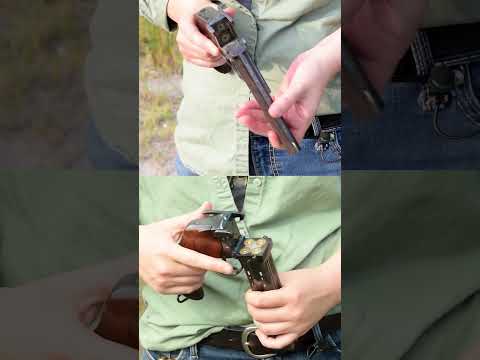
This video details the Pidault-Cordier "Raphael" revolver from 1860, highlighting its advanced features for its time, including a center-fire system with a unique brass casing that could cause cylinder rotation issues. It explains the specific loading and unloading procedure involving a safety position and a gate mechanism, and touches upon its historical procurement by the US Army during the Civil War.

Quick Summary

The 1860 Pidault-Cordier "Raphael" revolver was an advanced firearm for its era, featuring early single-action and double-action mechanisms and a center-fire system. Its brass casings could bulge, affecting cylinder rotation, and it required a specific gate-loading procedure. The US Army acquired 106 units for the Civil War.

Frequently Asked Questions

What makes the Pidault-Cordier "Raphael" revolver technologically advanced for 1860?

The "Raphael" was advanced for 1860 due to its early single-action and double-action capabilities and its center-fire system. It also featured a unique loading mechanism and accessible lockwork for its time.

What was unique about the "Raphael" revolver's center-fire ammunition?

The "Raphael" used a full brass casing with a center-fire primer. A potential issue was that the soft brass could bulge at the rear when fired, sometimes making cylinder rotation difficult.

How is the Pidault-Cordier "Raphael" loaded and unloaded?

Loading and unloading involves advancing the cylinder to a specific safety position, depressing a stiff spring to open the gate, loading each chamber individually by rotating the cylinder, and then closing the gate.

Did the US Army use the Pidault-Cordier "Raphael" revolver?

Yes, the US Army purchased 106 units of the "Raphael" in September 1861 for use during the Civil War. It was imported into America by George Raphael.

More Gunsmithing & DIY Videos You Might Like

More from C&Rsenal

View all →