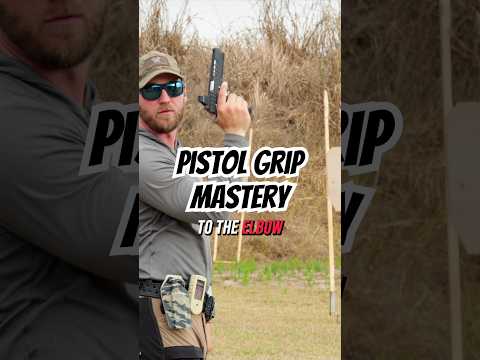
How to Grip a Pistol with Navy SEAL Mark "Coch" Cochiolo

Published on November 12, 2020
Duration: 5:37

This guide details the essential steps for achieving a proper pistol grip, as demonstrated by former Navy SEAL Mark "Coch" Cochiolo. It covers critical aspects like trigger finger placement, establishing a high grip, and integrating the support hand for optimal control and accuracy. The instruction emphasizes building muscle memory through deliberate practice.

Quick Summary

Learn essential pistol grip techniques from former Navy SEAL Mark "Coch" Cochiolo. Key advice includes precise trigger finger placement, establishing a high grip under the beaver tail with a slight gap to the frame, and ensuring a consistent master grip by drawing to a 'known point'.

Chapters

  1. 00:00Introduction and Safety
  2. 00:19Trigger Finger Placement
  3. 01:10Establishing the Primary Grip
  4. 01:54Drawing to a Master Grip
  5. 02:40Two-Handed Grip Mechanics
  6. 03:40Building the Grip During Presentation
  7. 04:23Full Demonstration and Training Advice

Frequently Asked Questions

What is the correct placement for the trigger finger on a pistol?

The trigger finger should be placed between the first crease of your finger and the middle of the first digit. This placement helps prevent unintended movement of the firearm during the trigger press, ensuring greater accuracy.

How should the support hand be positioned when gripping a pistol?

The support hand should fit snugly against the primary hand like a puzzle piece. The index finger of the support hand typically rests against the trigger guard, and the thumbs should align parallel to the barrel.

Why is a consistent master grip important?

A consistent master grip is vital for accuracy and control. By driving your hand to a specific 'known point' on the grip during the draw, you ensure a repeatable and effective grip every time you present the firearm.

What common mistake should be avoided when gripping a pistol?

A common mistake is applying lateral pressure to the pistol frame with your shooting hand. Leaving a small gap between your palm and the frame helps prevent this, ensuring your point of aim remains stable.

More Training & Techniques Videos You Might Like

More from Tactical Hyve

View all →