How to Shoot Sporting Clays with Gil Ash

Published on September 30, 2025
Duration: 65:32

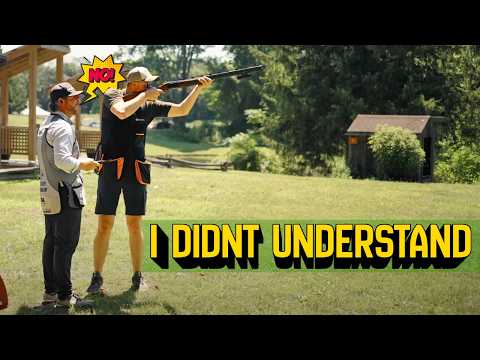
This video features Gil Ash, a renowned shotgun instructor with over 35 years of experience, discussing advanced techniques for sporting clays. He emphasizes a neuroscience-based approach, focusing on how the brain processes visual information and anticipates target movement. Key takeaways include the importance of 'matching speed,' 'gluing your nose to the target,' and specific drills like the 'three cup drill' to train the subconscious mind for accurate shooting.


Quick Summary

Mastering shotgun shooting involves training your subconscious brain to match the target's speed and focus on the target itself. Instructor Gil Ash emphasizes neuroscience-based techniques, like the 'three cup drill,' to improve visual processing and predictive abilities, moving beyond traditional methods of calculating lead.

Chapters

  1. 00:16Introduction to Gil Ash and Sporting Clays
  2. 00:52Gil Ash's Origin Story in Sporting Clays
  3. 03:39Transition from Photography to Shotgun Instruction
  4. 05:08The Joy of Seeing Students 'Get It'
  5. 05:37What to Expect at a Travel Clinic
  6. 06:07Prerequisites for OSP Clinics
  7. 06:38Neuroscience of Shotgun Shooting: The Brain's Role
  8. 07:27The Problem with Looking Down the Barrel
  9. 08:34Evolution of Teaching Methods Based on Neuroscience
  10. 09:51Shift from Teaching 'How to Hit' to 'How to Self-Correct'
  11. 10:54The Importance of Length of Pull
  12. 12:15Proper Stock Fitment and Recoil Management
  13. 14:11Adjustable Stocks: Shims, Spacers, Cast On/Off
  14. 15:00Why Off-the-Shelf Guns Often Don't Fit
  15. 16:20Common Shooting Errors and Gun Fit
  16. 19:55Posture and its Impact on Gun Fit
  17. 21:06Rib Width, Texturing, and Glare Reduction
  18. 21:14Why High-Viz Sights Aren't Always Best for Shotguns
  19. 23:09Trivia: Why Shotguns Have Vented Ribs
  20. 23:54Gil Ash's Books and Training Vault
  21. 24:53The Flashlight Drill Explained
  22. 25:55The 'Three Cup Drill' for Sight Picture Training
  23. 28:33Key Takeaway: Get Your Head Off the Comb
  24. 30:12Visualizing Target Movement and Brain Processing
  25. 33:09Conscious vs. Unconscious Brain in Shooting
  26. 35:43Applying Techniques to Upland Bird Hunting
  27. 38:44Range Experience and Ammunition Discussion
  28. 40:23Optimizing Practice Time at the Skeet Range
  29. 41:07Neuroscience of Vision: Brain vs. Camera
  30. 43:13The Evolution of Sporting Clays Difficulty
  31. 45:39How We Perceive Visually: Prediction and Memory
  32. 49:02Ammunition Technology and Adjustable Triggers
  33. 50:31Trigger Timing in Shotgun Shooting
  34. 50:45The Myth of Faster Ammo Reducing Lead
  35. 52:43Evolution of Shot Shell Technology
  36. 55:14Ensuring the Next Generation Learns Gil's Teachings
  37. 58:06Brian Ash's Role and Future of OSP
  38. 60:21Visualizing and Brain's Role in Skill Acquisition
  39. 61:15The Brain Sees, Not Like a Camera
  40. 63:19Brain's Ability to Interpret Sequences (Hearing Example)
  41. 63:54Conclusion and Final Thoughts
  42. 64:24Life is a Shotgun: Reloading for Another Try

Frequently Asked Questions

What is the most important takeaway for improving shotgun shooting according to Gil Ash?

The most crucial takeaway is to match the target's speed and focus on the target itself, rather than trying to consciously calculate lead. This allows your subconscious brain, which processes information much faster, to accurately place the shot.

How does Gil Ash's teaching method differ from traditional shotgun instruction?

Gil Ash's method is heavily based on neuroscience, emphasizing how the brain processes visual information and learns. He focuses on training the subconscious mind through specific drills and understanding the brain's predictive capabilities, moving away from simply teaching 'how to hit' to 'how to self-correct'.

What is the 'three cup drill' and why is it important for shotgun shooters?

The 'three cup drill' involves focusing on a middle cup while mounting to side cups. This trains your brain to see the target across the barrel, which is essential for accurately shooting crossing targets in sporting clays and hunting.

Why is proper shotgun stock fitment, especially length of pull, so critical?

A correct length of pull ensures your wrist remains straight when shouldering the gun, allowing your arms to act as shock absorbers for recoil. This reduces felt recoil and improves your ability to maintain a stable sight picture.

Does faster ammunition make a significant difference in leading a target?

According to Gil Ash, the belief that faster ammo significantly reduces lead is largely a myth. The difference in lead required for ammunition with speeds like 1150 fps versus 1350 fps at 40 yards is only about 4 inches, which is less than the size of the shotgun bead.

More Training & Techniques Videos You Might Like

More from Guns & Ammo

View all →