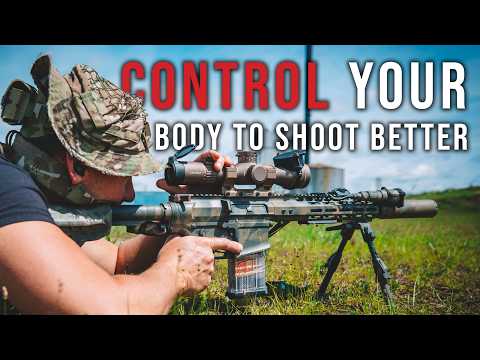
Intro to Long Range with Bruiser Industries

Published on May 11, 2022
Duration: 57:23

This video transitions viewers from short-range to long-range precision shooting, focusing on AR platforms and precision rifles. It details the importance of ballistic calculators, explaining G1 vs. G7 coefficients and how to 'true' ballistic data using a Kestrel without a chronograph. Advanced techniques for tripod stability, including leg orientation and using slings for tension, are demonstrated. The content also covers windage estimation methods for quick adjustments at distance.

Quick Summary

To true ballistic data without a chronograph, start with a 'SWAG' for muzzle velocity in your app. Adjust velocity based on mid-range hits, then refine the Ballistic Coefficient (BC) using long-range impacts to match your rifle's actual performance.

Chapters

  1. 00:00Intro to Long Range Training
  2. 01:16Ballistics: G1 vs G7 Coefficients
  3. 03:49Truing Ballistic Data Without Chronograph
  4. 11:31Tripod Shooting Fundamentals
  5. 15:23Advanced Stability Techniques
  6. 19:25Windage Estimation & Drills

Frequently Asked Questions

How do you true ballistic data without a chronograph?

You can 'true' ballistic data by starting with a 'SWAG' (Scientific Wild-Ass Guess) for muzzle velocity in your ballistic app. Adjust this velocity based on actual hits at mid-range. Then, fine-tune the Ballistic Coefficient (BC) based on hits at longer ranges to match the calculator's trajectory to your rifle's performance.

What is the difference between G1 and G7 ballistic coefficients?

G1 is an older standard for ballistic coefficients, based on flat-based bullets. G7 is more accurate for modern boat-tail hollow point bullets because it uses a more comparable aerodynamic model for drag calculation, leading to better trajectory predictions.

How can I improve stability when shooting from a tripod?

Maximize stability by orienting tripod legs (two back for stability). Use shooting bags like the Armageddon Gear Gamechanger to create a large contact patch. Additionally, attaching a rifle sling to a tripod leg can create downward tension to minimize reticle wobble.

What is the 'fast wind' formula for long-range shooting?

The 'fast wind' formula helps estimate wind speed quickly. It involves finding the wind speed that would cause 0.1 mil of drift at 100 yards. This allows for rapid mental calculation of windage corrections needed at greater distances.

Related News

All News →

More Training & Techniques Videos You Might Like

More from Jimmy B Rodriguez

View all →