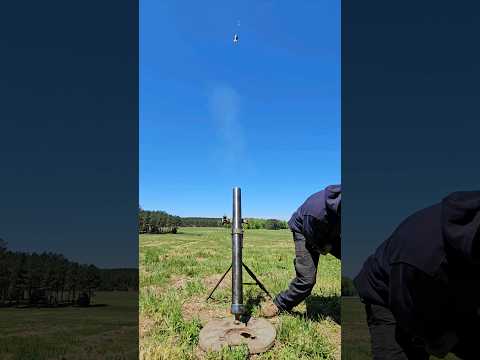
M31 Rifle Grenade Fired From The M1 Garand Using The M7 Launcher Attachment #military #m1garand #war

Published on February 12, 2024
Duration: 0:43

This guide details the process of preparing and launching an M31 Practice Rifle Grenade using an M1 Garand and M7 Launcher. It covers unboxing the inert grenade and blank cartridges, proper attachment of the launcher, and essential safety considerations for this historical ordnance. The instruction emphasizes the use of specific blank cartridges designed for grenade propulsion.

Quick Summary

Launching an M31 Practice Rifle Grenade from an M1 Garand involves using an M7 Launcher attachment and specialized M3 .30 caliber blank cartridges. The blank provides the gas pressure to propel the inert grenade, making it a safe training method for historical ordnance deployment. Always follow strict safety protocols.

Chapters

  1. 00:00Unboxing M31 Practice Rifle Grenade
  2. 00:20Grenade Inspection
  3. 00:30M3 Blank Cartridges

Frequently Asked Questions

How is an M31 Practice Rifle Grenade launched from an M1 Garand?

An M31 Practice Rifle Grenade is launched from an M1 Garand using an M7 Launcher attachment. A special .30 caliber M3 blank cartridge is fired from the M1 Garand to provide the necessary gas pressure to propel the grenade.

What is the purpose of the M3 Rifle Grenade Cartridge?

The M3 Rifle Grenade Cartridge is a blank round specifically designed to generate the high-pressure gas needed to launch a rifle grenade from a firearm equipped with a launcher attachment, like the M7 on an M1 Garand. It acts as the propellant.

What are the key components for launching a rifle grenade with an M1 Garand?

The key components are the M1 Garand rifle, the M7 Launcher attachment fitted to the muzzle, the M31 Practice Rifle Grenade (or a live variant), and the specialized M3 Rifle Grenade Cartridge (blank) for propulsion.

How can you identify an inert practice rifle grenade?

Inert practice rifle grenades, like the M31 shown, are typically painted a distinct color, often blue, to visually distinguish them from live ordnance. They also bear markings indicating 'PRACTICE' or 'INERT'.

More Training & Techniques Videos You Might Like

More from Ordnance

View all →