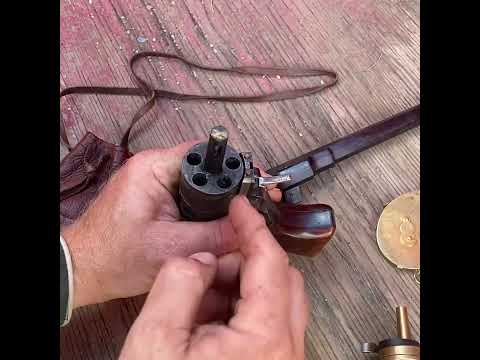
Percussion Revolvers in the Rain

Published on August 18, 2021
Duration: 20:01

This guide details an experiment testing the reliability of percussion revolvers and flintlocks in simulated rainy conditions, as demonstrated by Karl Kasarda. It highlights the susceptibility of ignition systems to moisture and the practical limitations that led to the adoption of metallic cartridges. The experiment involves loading, exposing to water, and testing for ignition failures, offering insights into historical firearm performance.


Quick Summary

Percussion revolvers are significantly unreliable in heavy rain due to moisture compromising the ignition system. Water can saturate the percussion cap and nipple, causing misfires or delayed ignition. While techniques like using oversized balls can help seal the chamber from the muzzle, the rear ignition point remains highly vulnerable, historically driving the transition to more reliable metallic cartridges.

Chapters

  1. 00:00Introduction to Rain Test
  2. 01:31Flintlock Vulnerability
  3. 03:20Percussion Revolver Loading
  4. 06:23Percussion Cap Sealing
  5. 08:32Flintlock Rain Test Results
  6. 10:251860 Colt Rain Test Results
  7. 11:52Starr Revolver Rain Test Results
  8. 13:38Testing with Wads
  9. 18:17Conclusion on Reliability

Frequently Asked Questions

How reliable are percussion revolvers in the rain?

Percussion revolvers are generally unreliable in heavy rain. Moisture can easily contaminate the percussion cap and the nipple, leading to misfires or delayed ignition, as demonstrated in tests by InRangeTV.

What makes flintlock pistols unreliable in wet conditions?

Flintlock pistols are highly susceptible to rain because the priming powder in the pan can become saturated with water, turning into mud and preventing the spark from igniting the main charge.

What is the purpose of using oversized lead balls in percussion revolvers?

Using oversized lead balls, like the .457 size in a .44 caliber Colt, aims to create a tight seal within the chamber. This sheared lead ring can help prevent water from entering the cylinder from the muzzle end.

What is the main failure point for percussion revolvers in wet weather?

The primary failure point for percussion revolvers in wet weather is the ignition system, specifically the percussion cap and nipple interface. Moisture easily compromises the seal and the primer's ability to detonate effectively.

More Training & Techniques Videos You Might Like

More from InRangeTV

View all →