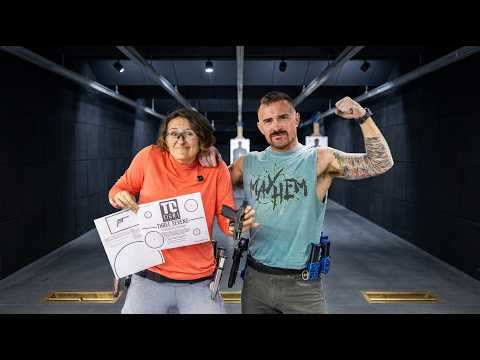
Practical Shooting After Dark EP 169

Published on November 18, 2021
Duration: 29:37

This video segment focuses on efficient dry fire practice, particularly during winter months. The hosts discuss setting up targets using target sticks and cardboard to create partial targets and simulate different focal depths. The goal is to maximize training efficiency and round count in shorter sessions, while also preparing for more complex stage plans in competition.

Quick Summary

To make winter dry fire practice more efficient, use a target stick and staple targets to it. You can flip the stick to use both sides and create partial targets by taping cardboard to the back. Varying the distances of these targets simulates different focal depths, maximizing training effectiveness in shorter sessions.

Chapters

  1. 00:00Introduction & Show Setup
  2. 00:45Discussion on Shooting Sports Politics
  3. 02:45Physical Conditioning for Shooters
  4. 05:27RO Certification Requirements Debate
  5. 09:11Efficient Winter Dry Fire Setup
  6. 13:43Dry Fire Target Setup Counterpoint
  7. 15:37Focal Depth in Dry Fire Training
  8. 18:47Carbine Training Drills & Insights
  9. 20:53Red Dot vs LPVO for Carbine
  10. 23:23Iron Sights vs Red Dot Speed Debate
  11. 25:53Improving Iron Sight Shooting
  12. 28:34Lighting & Prescription Factors
  13. 29:09Show Wrap-up & Listener Questions

Frequently Asked Questions

How can I make my dry fire practice more efficient, especially in winter?

To make winter dry fire practice more efficient, use a target stick and staple targets to it. You can flip the stick to use both sides and create partial targets by taping cardboard to the back. Varying the distances of these targets simulates different focal depths, maximizing training effectiveness in shorter sessions.

What is 'micro steering' in firearm shooting?

Micro steering refers to the subtle adjustment needed to perfectly center the front sight within the rear notch of iron sights. Even when the front sight is returned, a small amount of micro steering might be required to achieve optimal alignment for a precise shot, especially at certain distances.

Why are red dot sights generally faster than iron sights for shooting?

Red dot sights are typically faster because they eliminate the need for the shooter to align the front and rear sights. With a red dot, the shooter only needs to ensure the dot is on the target, removing the focal depth change and sight alignment checks required by iron sights, which become a limiting factor at certain distances.

How can I improve my shooting with iron sights to be more like using a red dot?

To improve iron sight shooting, consider increasing the size of your front sight fiber optic. A larger fiber can be more visible in your peripheral vision, helping you time shots better and making it feel more like using a red dot, especially at closer distances. Ensure the fiber is sized so it doesn't obscure the top of the front sight.

Related News

All News →

More Training & Techniques Videos You Might Like

More from Ben Stoeger

View all →