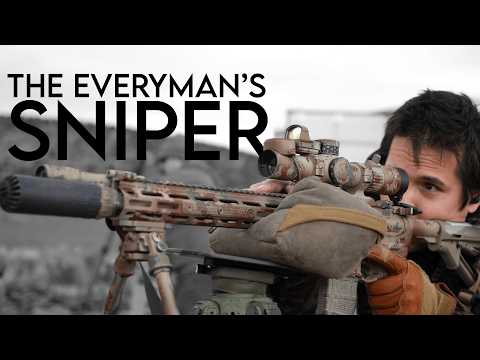
Precision Rifle Setup with Bruiser Industries

Published on February 3, 2025
Duration: 68:37

Joe Dawson of Bruiser Industries provides expert instruction on precision rifle setup, emphasizing critical elements like length of pull, trigger finger placement, and scope mounting. He details how to achieve proper eye relief, set up bubble levels for accurate cant correction, and adjust ocular focus and parallax for optimal clarity. The guide also covers accessory integration such as bipods and sling attachments, stressing the importance of a repeatable shooting platform.


Quick Summary

Proper precision rifle setup involves optimizing length of pull, trigger finger placement, and scope mounting for a stable and repeatable shooting platform. Key adjustments include ensuring a neutral wrist, correct trigger finger position for a straight pull, and setting eye relief for a clear sight picture. Using a bubble level to maintain a level rifle and properly adjusting ocular focus and parallax are crucial for accuracy.

Chapters

  1. 00:00Introduction to Precision Rifle Setup
  2. 00:26Importance of Proper Rifle Setup
  3. 01:25Understanding Length of Pull
  4. 02:16Strong and Weak Side Arm Placement
  5. 03:41Wrist Orientation and Trigger Finger Placement
  6. 05:11Proper Trigger Finger Placement Explained
  7. 07:00Isolating Trigger Finger Joints
  8. 08:47Finding Your Trigger Stop
  9. 10:07Adjusting Length of Pull for Gear
  10. 12:30Scope Mounting and Magnification Choices
  11. 13:32Magnification Rule of Thumb
  12. 15:46First vs. Second Focal Plane Scopes
  13. 21:23Scope Mounts: Rings vs. Unimounts
  14. 23:51Understanding Scope Mount Cant (MOA)
  15. 28:15Centering Scope in Rings and Eye Relief
  16. 32:14Importance of Reticle Leveling
  17. 34:48Bubble Level Placement and Adjustment
  18. 38:51Ocular Focus and Parallax Adjustment
  19. 41:58Setting Parallax at 100 Yards
  20. 42:03LPVO Specific Adjustments
  21. 45:27Optic Height Measurement
  22. 47:23Cheek Weld and Comb Adjustment
  23. 48:28ARCA Rails vs. Picatinny Rails
  24. 51:39Night Vision Bridges and Barrel Contact
  25. 53:13Rifle Weight Distribution and Balance
  26. 55:11Ancillary Equipment: Suppressors
  27. 56:45Bipod Selection: Harris vs. Atlas vs. Others
  28. 62:04Sling Attachment Points and QD Maintenance
  29. 65:18Bipod Placement and Adjustment Strategy
  30. 66:26AR vs. Picatinny Rail Preference
  31. 68:05Conclusion and Further Resources

Frequently Asked Questions

What is the correct length of pull for a precision rifle?

The length of pull is a starting point determined by breaking your shoulder at 90 degrees and extending the buttstock to your bicep. This measurement is then fine-tuned based on your shooting position, gear, and personal comfort to ensure proper reach to the trigger and a stable shooting platform.

How do I properly position my trigger finger for accurate shooting?

For optimal trigger control, position your finger so the bone is parallel to the rifle's axis, using a single joint for the press. This allows for a straight, neutral pull, avoiding lateral input that can occur when using the fat part of the finger or incorporating multiple joints.

What is the recommended magnification range for a precision rifle scope?

A general guideline for scope magnification is 1.5 to 2 times the intended shooting distance in yards. For example, 7-10x power is suitable for 500 yards, and 15-20x for 1000 yards. Avoid excessive magnification which can narrow your field of view and make target acquisition difficult.

Why is a bubble level important for precision rifle setup?

A bubble level ensures your rifle is perfectly level, preventing cant. Even a slight degree of cant can cause significant lateral deviation at longer distances, potentially causing you to miss the target entirely. It's a critical tool for maintaining consistent aiming.

What's the difference between First Focal Plane (FFP) and Second Focal Plane (SFP) scopes?

In FFP scopes, the reticle scales with magnification, so subtensions (like MILs or MOA) are accurate at any power. SFP scopes have reticles that remain a fixed size, making subtensions accurate only at the highest magnification. FFP is generally preferred for competitive shooting due to its versatility.

Related News

All News โ†’

More Training & Techniques Videos You Might Like

More from Jimmy B Rodriguez

View all โ†’