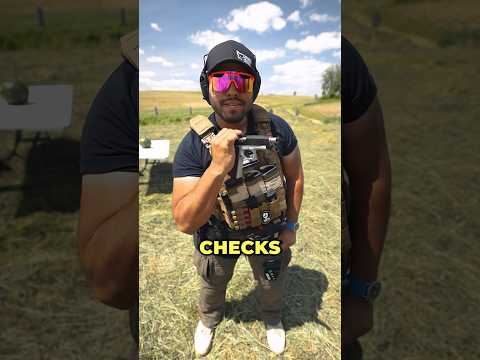
Reloading 2 At One Time - Tactical Reloads

Published on February 1, 2024
Duration: 0:36

This guide details the tactical reload technique demonstrated by Johnny Q, emphasizing retaining the partial magazine for potential later use. It's crucial for situations where you've fired but still have rounds left. Johnny Q, demonstrating high-level proficiency, stresses repetitive practice to achieve flawless execution and build essential muscle memory for fluid weapon manipulation.

Quick Summary

A tactical reload is performed when you have fired shots but still have ammunition remaining in the magazine. It involves swapping the partial magazine for a full one and retaining the partial magazine in a carrier rather than dropping it, preserving ammunition for potential later use.

Chapters

  1. 00:00Introduction to Tactical Reloads
  2. 00:04Scenario and Definition
  3. 00:11Execution and Retention
  4. 00:21Training and Application

Frequently Asked Questions

What is a tactical reload?

A tactical reload is performed when you have fired shots but still have ammunition remaining in the magazine. It involves swapping the partial magazine for a full one, crucially retaining the partial magazine for potential later use, unlike an emergency reload.

How do you perform a tactical reload?

Retrieve a fresh magazine, swap it with the partial one in the firearm, and retain the partial magazine in a carrier. This should be done when time and opportunity permit, emphasizing repetitive practice for muscle memory.

What is the 'L-shape' magazine swap technique?

The 'L-shape' or 'index' magazine swap is a method for efficiently exchanging a partial magazine for a full one, often involving retaining the partial magazine in the support hand or a carrier during the transition.

Why is retaining the partial magazine important in a tactical reload?

Retaining the partial magazine is key to a tactical reload because it preserves ammunition that may be needed later in a situation, unlike an emergency reload where the partial magazine is typically discarded.

Related News

All News →

More Training & Techniques Videos You Might Like

More from Johnny Q

View all →